A Jogye Order head temple near Gongju dating to the 7th century, with temple stay programs.
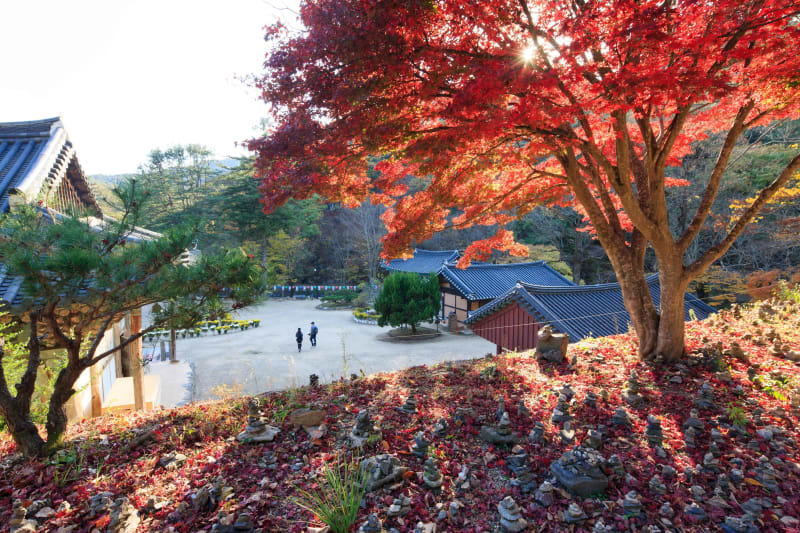
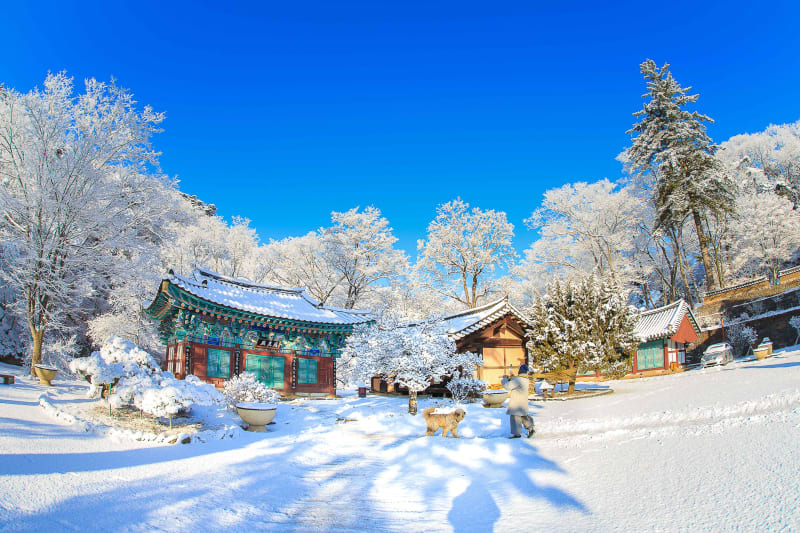
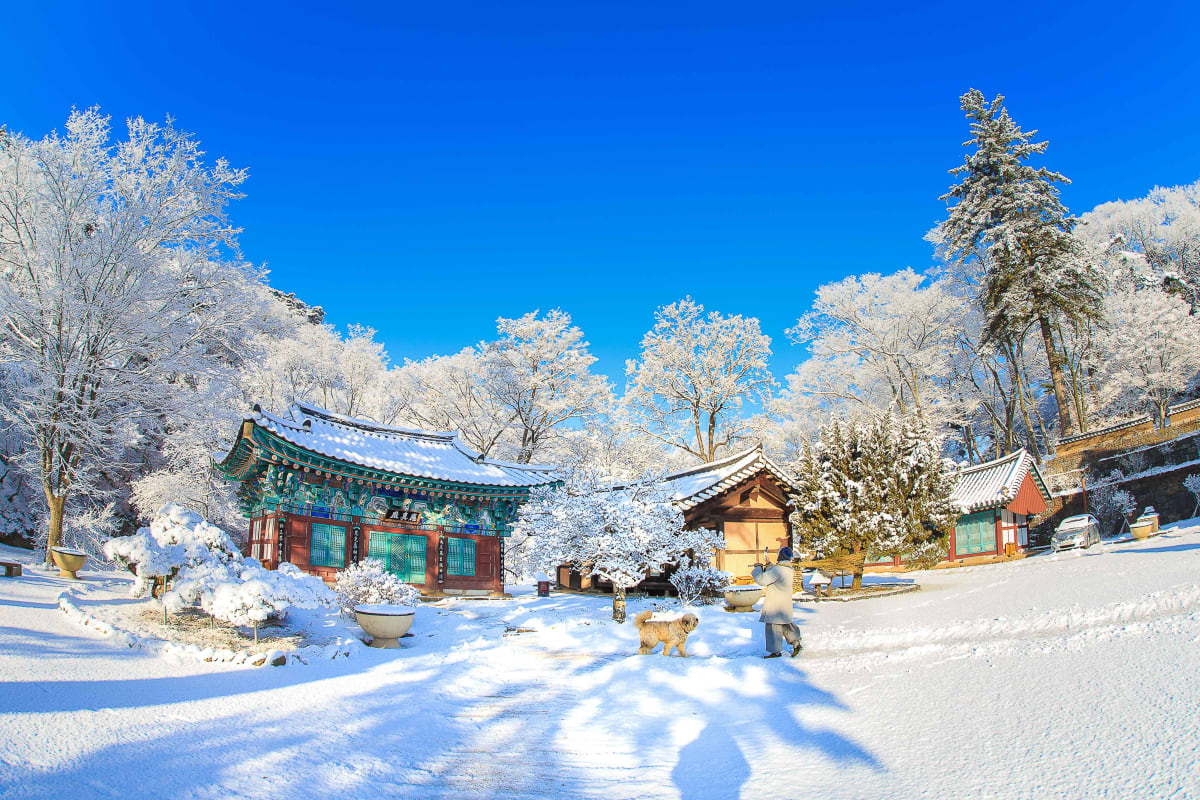
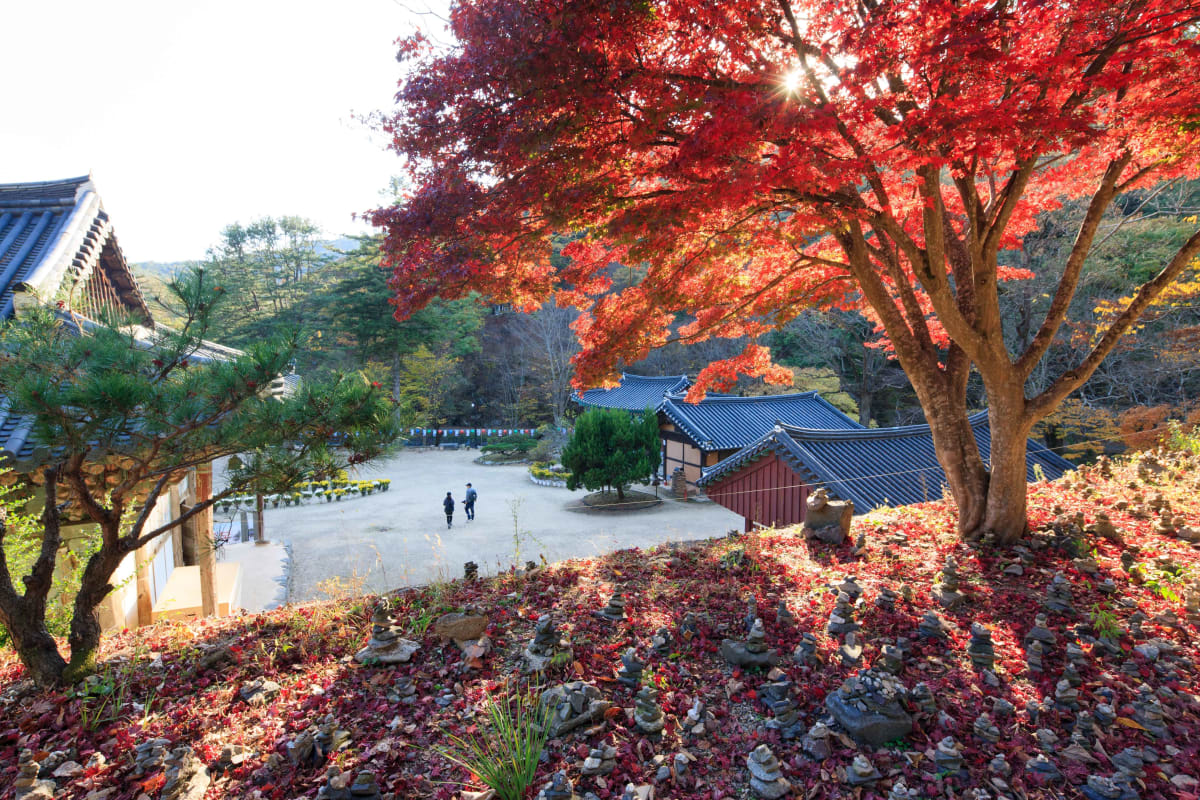
Magoksa is a head temple of the Jogye Order of Korean Buddhism in Gongju, in the Chungcheong region, on the eastern slope of Mount Taehwasan where the Taegeukcheon Stream curves around it in a taegeuk (yin-yang) shape. It was established in 640 by the monk Jajang, who also founded Tongdosa Temple, after Silla's Queen Seondeok granted him land on which to build a brick pagoda and the temple. Visitors can join temple stay programs to experience Buddhist monastic life.
Hemp Stalks, Thieves, and Kim Gu
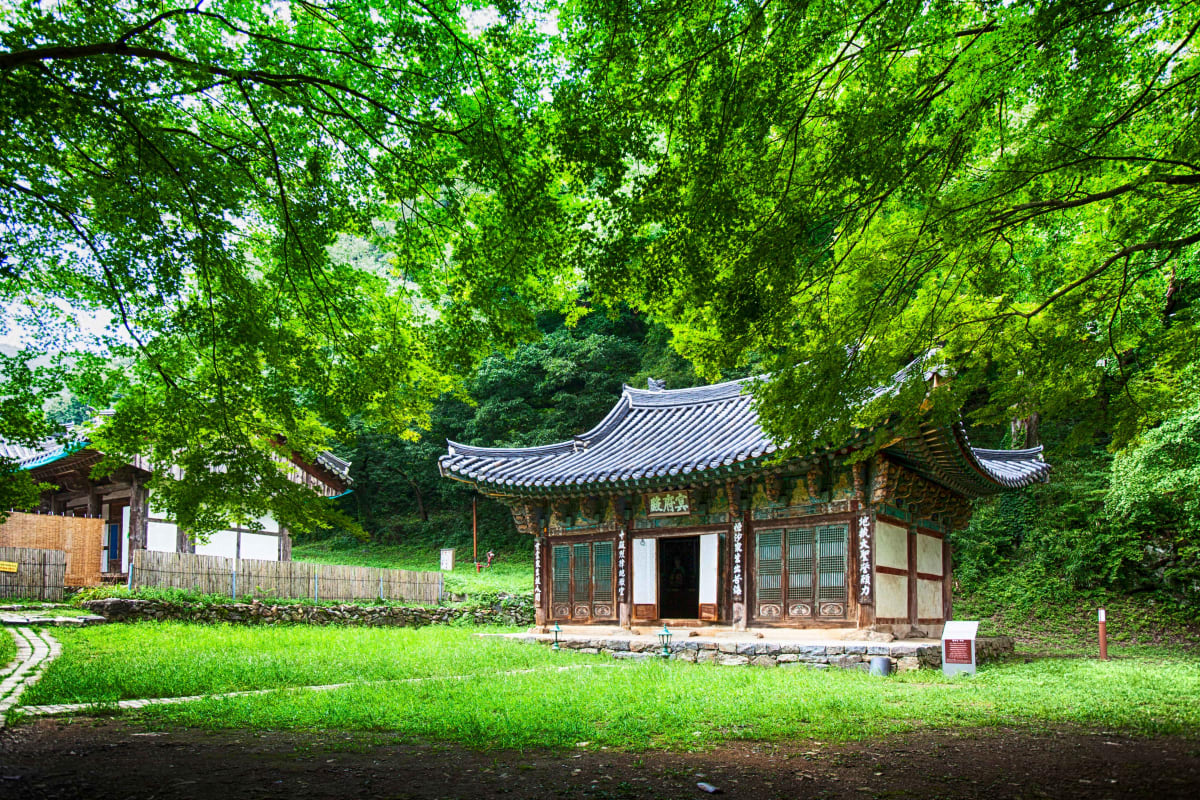
The name Magoksa comes from a later resident monk, Bocheol Hwasang, who thought the crowds gathering for his Dharma talks resembled hemp stalks (ma) packed tightly together in a field. The temple was abandoned during the transition from the Goryeo to the Joseon dynasty and became a hideout for thieves for about 200 years, until the monk Jinul drove them out and renovated it in 1172. Joseon's King Sejo later visited and wrote the plaque for Yeongsanjeon Hall, leaving behind the palanquin he traveled in. Most buildings burned down during the Japanese invasions of 1592 to 1597, and several, including Daeungjeon and Yeongsanjeon, were rebuilt in 1651. During the Korean Empire period, Kim Gu lived briefly as a monk at Magoksa under the name Wonjong after escaping from Incheon Prison, having been imprisoned for killing a Japanese military officer who had conspired with the murderers of Empress Myeongseong; a juniper tree in front of Daegwang-bojeon Hall is said to have been planted by him.
Buildings and Cultural Properties
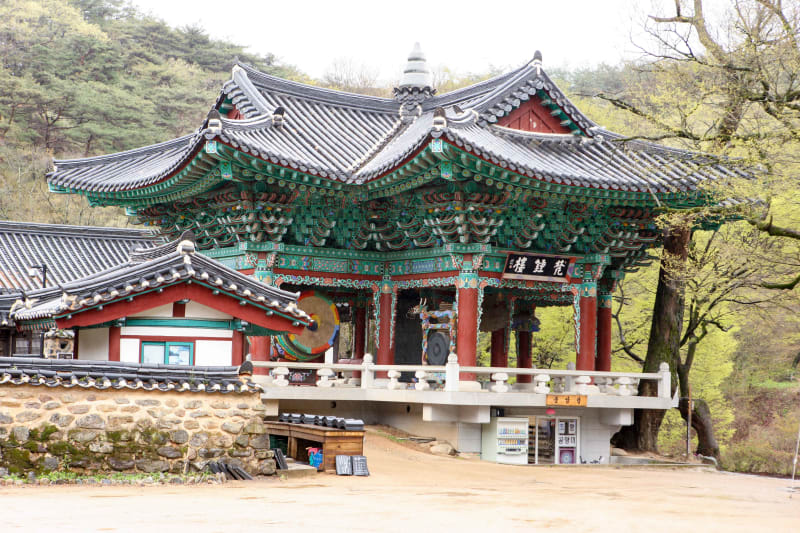
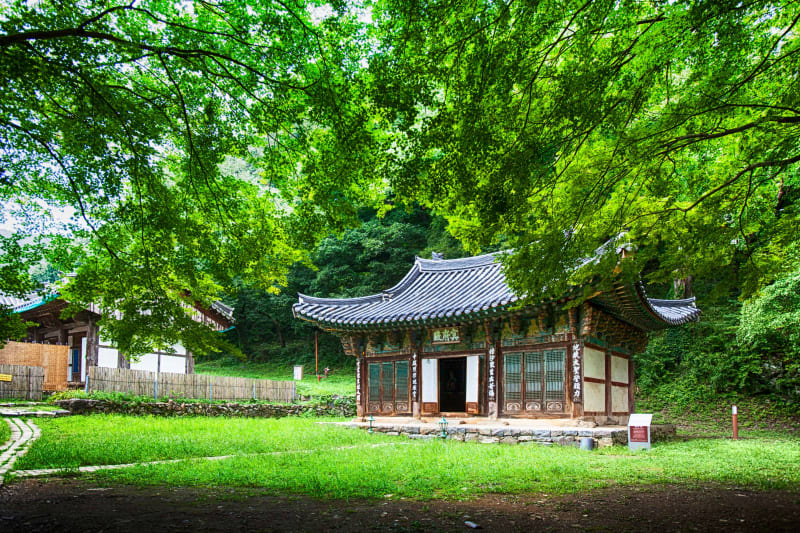
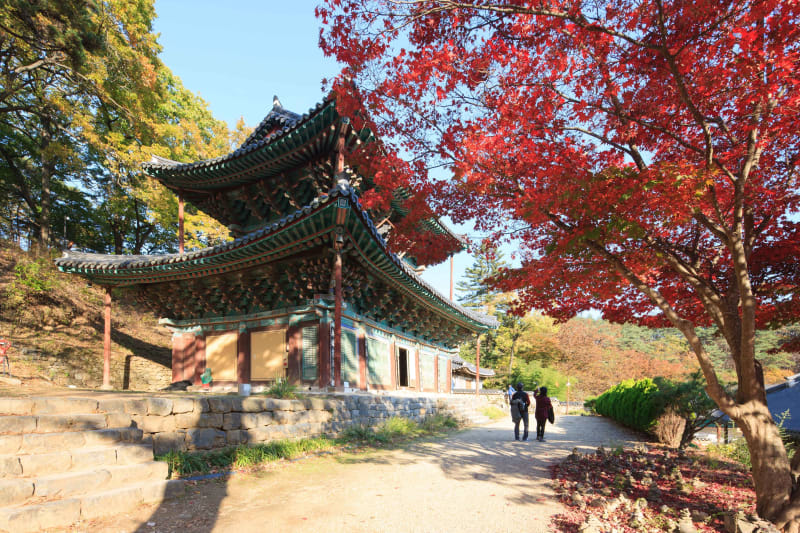
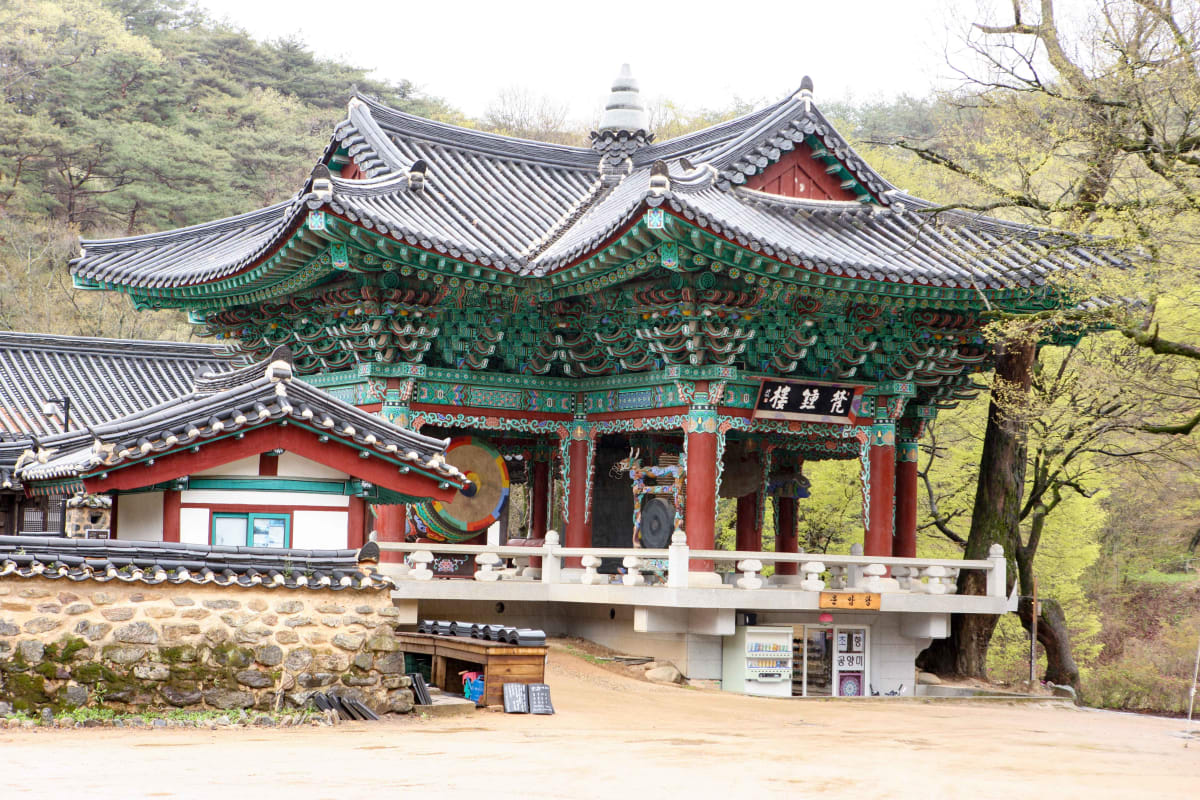
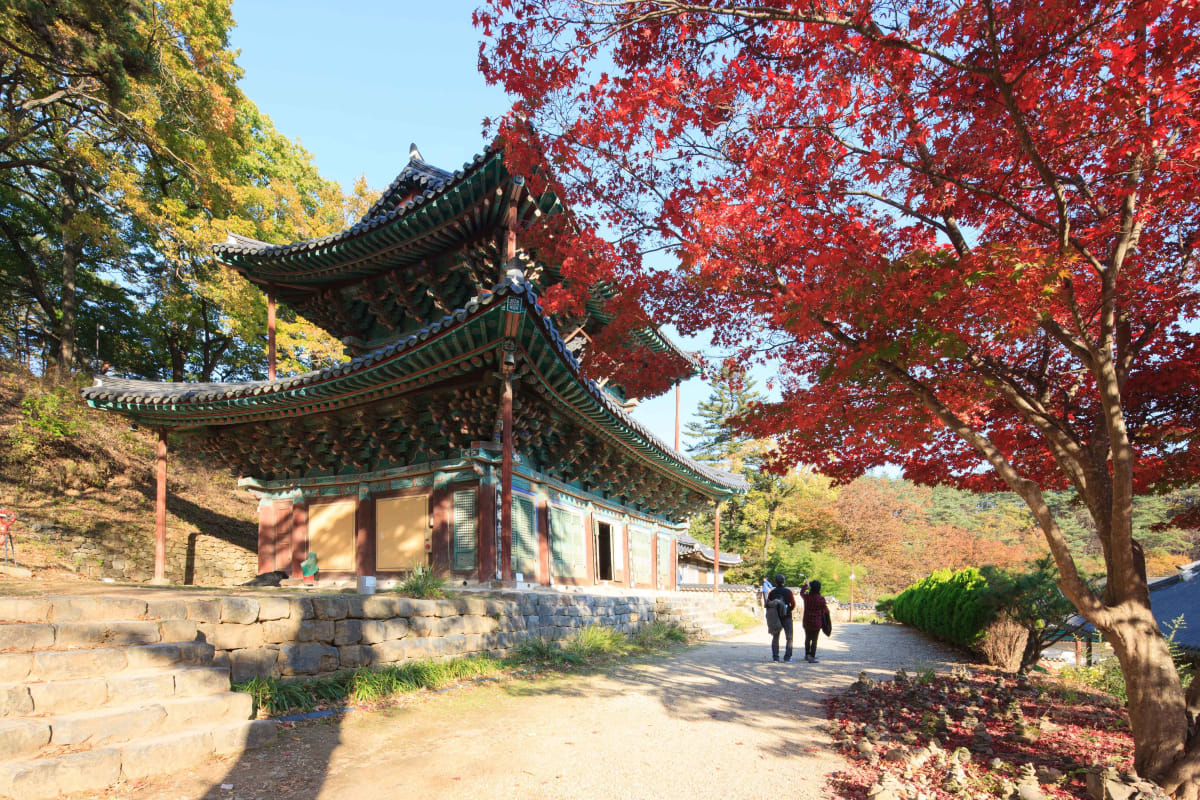
Magoksa was once a large complex of some 30 buildings, though today only a handful remain, including Daeungbojeon, Daegwangbojeon, Yeongsanjeon, the Cheonwangmun (Gate of the Four Heavenly Kings), and Haetalmun (Gate of Nirvana). The temple holds a five-story stone pagoda (Treasure No. 799), one of only three in the world topped with a bronze finial, reflecting Tibetan Buddhist influence, along with Yeongsanjeon (Treasure No. 800), Daeungbojeon (Treasure No. 801), and Daegwangbojeon (Treasure No. 802). Other holdings include a hanging Buddhist painting, wooden tablets, a palanquin used by King Sejo, a bronze incense burner, old books, and hand-copied Buddhist scriptures written in gold and silver ink from the late Goryeo period. According to geomantic theory, the surrounding mountains and rivers form a taegeuk pattern, which led to Magoksa's selection as one of Joseon's ten safe havens from war and disaster; a Korean-language source credits this status with sparing the temple from damage during the Imjin War and the Korean War, though an English-language source states that most of the temple's buildings burned down during the Japanese invasions of 1592 to 1597. It was designated part of the UNESCO World Heritage listing "Sansa, Buddhist Mountain Monasteries in Korea," and several of its properties are registered as Chungcheongnam-do Tangible Cultural Heritage.
What to know
- In KoreanCopied
- HoursOpen 24 hours, year-round.
- Typically spend30–60 min
Amenities

Reviews
Book your visit
We may earn a commission from these links.
Stay nearby
We may earn a commission from these links.


 guru report