Hightlight
-
 Accessible
Travel Map: Seoul
Gwanghwamun Plaza | 광화문 광장
Seoul’s central square, directly in front of Gyeongbokgung Palace
Introduction
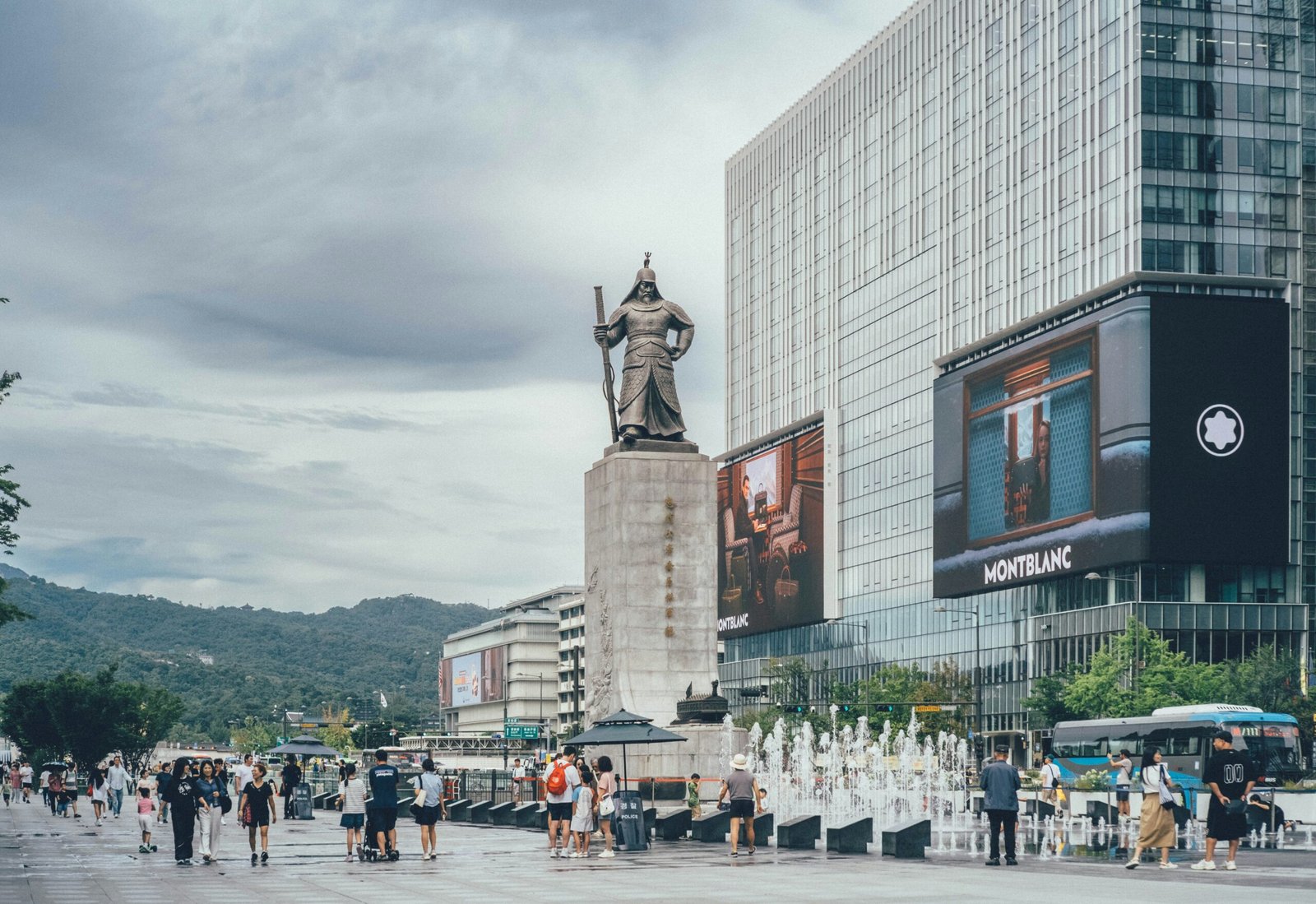
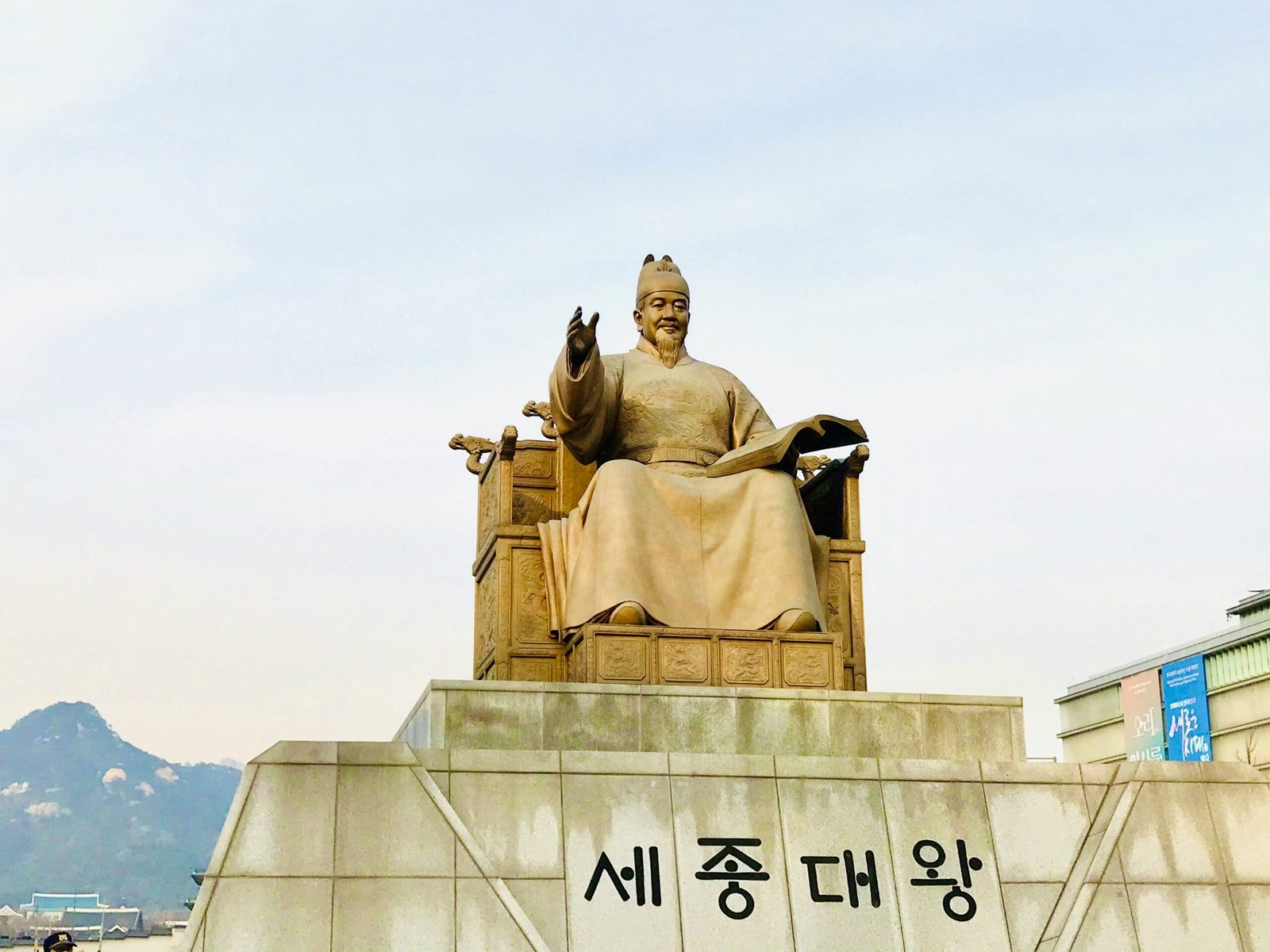
A 555-metre pedestrian plaza stretching from Gwanghwamun Gate to the Cheonggyecheon area. Statues of King Sejong and Admiral Yi Sun-sin, fountains, green space, and the mountain behind the palace framing everything. Renovated and reopened in 2022 with a much wider pedestrian area.
Worth Visiting?
You will probably end up here anyway. It sits between Gyeongbokgung and Cheonggyecheon Stream, so most walking routes through central Seoul pass through it. Worth slowing down for rather than just walking through. The view of Gwanghwamun Gate with Bugaksan behind it is one of the most iconic in Seoul, and the underground exhibitions are free and surprisingly good.
Not a place you need to dedicate time to, but a natural part of any Jongno area itinerary.
Highlights
King Sejong Statue
The 4th king of Joseon who created Hangeul, the Korean alphabet. Behind the statue there is an entrance to a free underground exhibition about his achievements. Worth a quick look.
Admiral Yi Sun-sin Statue
The legendary naval commander who won all 23 battles against the Japanese navy. The 12.23 Fountain around the statue is named after his 12 warships and 23 victories.
The View
Stand at the south end of the plaza and look north. Gwanghwamun Gate, the palace rooflines, and Bugaksan mountain all line up. This is the shot. Even better at sunset or after dark when the gate is lit up.
History Water Channel
A 212-metre water channel running along the plaza, inscribed with yearly markers from 1392 (founding of Joseon) to 2022. Easy to miss if you are not looking for it.
Haechi Madang (Underground)
An underground passage connecting Gwanghwamun Station (Exit 9) directly to the plaza. Has a large media art wall and a rest area. Good shortcut in bad weather.
Local Tips
- The plaza is open 24 hours. No tickets, no gates.
- The underground exhibitions (Story of King Sejong / Story of Admiral Yi Sun-sin) are free. Open Tue-Sun, 10:00-18:30. Closed Mondays.
- Fountains run April to October, 50 minutes on and 10 minutes off each hour.
- Walk from here to Cheonggyecheon Stream in about 5 minutes. Head southeast from the Admiral Yi statue toward the spiral sculpture at Cheonggye Plaza. That is where the stream starts.
- The National Museum of Korean Contemporary History is across the street. The 4th floor has a free panoramic view of the plaza and Gyeongbokgung.
Interesting Facts
Korea’s Protest Ground
Gwanghwamun Plaza is where Koreans go when they have something to say. The most famous example is the 2016-2017 candlelight protests that led to a presidential impeachment, but rallies and demonstrations happen here almost every weekend on some scale. If you visit on a Saturday and see crowds with signs or candles, that is normal. It is not dangerous. It is just how Korean democracy works.
Yukjo-geori | 육조거리
This plaza used to be Yukjo-geori, the street where the six central ministries of the Joseon Dynasty were lined up on both sides facing the palace gate. Think of it as Joseon’s version of Washington D.C.’s National Mall. The name literally means “Six Ministries Street.” When you walk down the plaza toward Gwanghwamun, you are walking the same path that government officials took to work over 600 years ago.
Getting There
By Subway (Recommended)
- Gwanghwamun Station (Line 5), Exit 2. You are on the plaza.
- Gyeongbokgung Station (Line 3), Exit 5. Walk south toward the plaza, about 5 minutes. Better if you are combining with a palace visit.
Practical Info
Key Info
| | |
|---|---|
| Admission | Free (plaza and underground exhibitions) |
| Plaza Hours | 24 hours |
| Underground Exhibitions | Tue-Sun 10:00-18:30, closed Mondays |
| Nearest Station | Gwanghwamun Station (Line 5), Exit 2 |
| Address | 172 Sejong-daero, Jongno-gu, Seoul |
| Nearby | Gyeongbokgung, Cheonggyecheon Stream, Sejong Center, Deoksugung (10 min walk) |