Travel Map: Seoul
숭례문
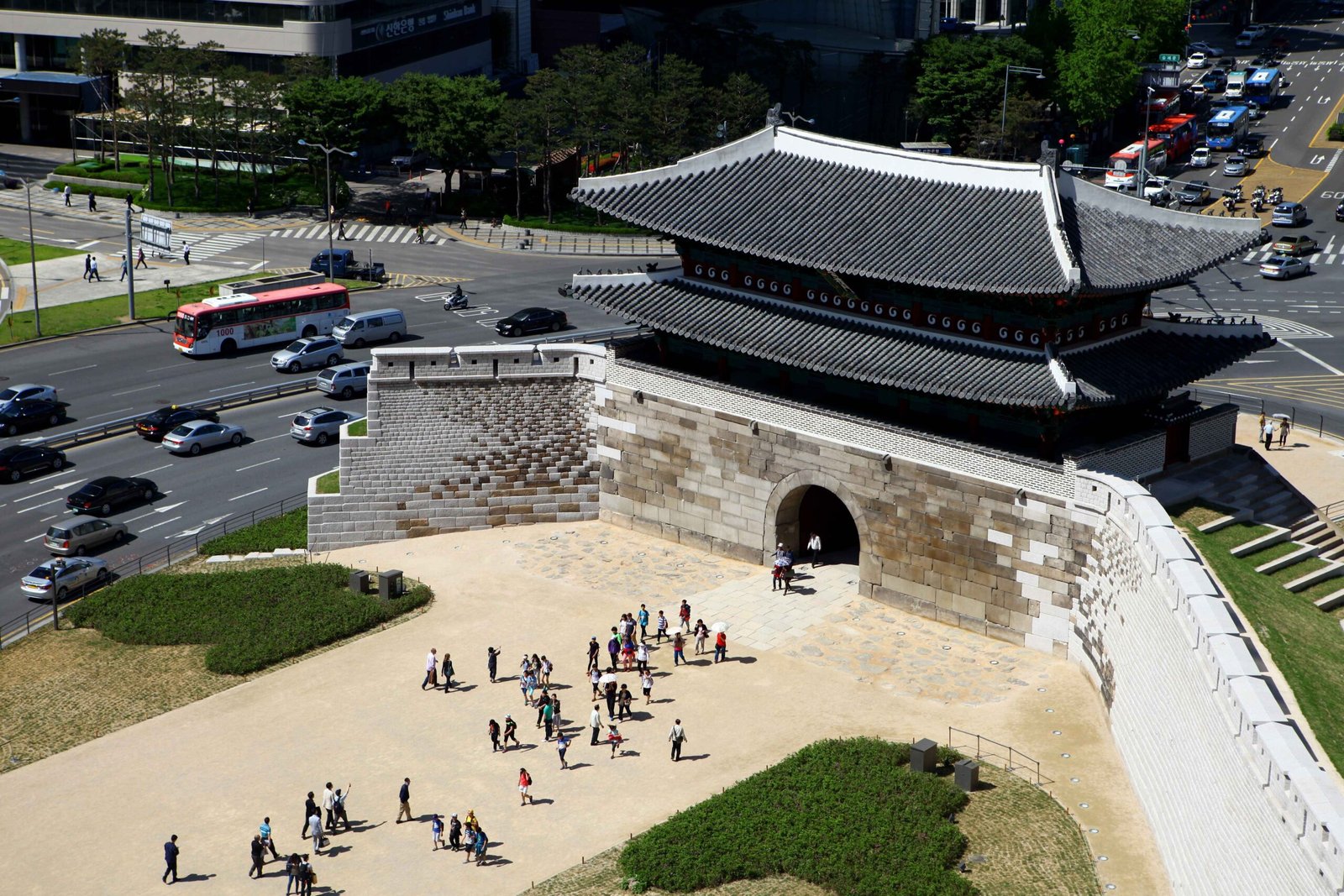
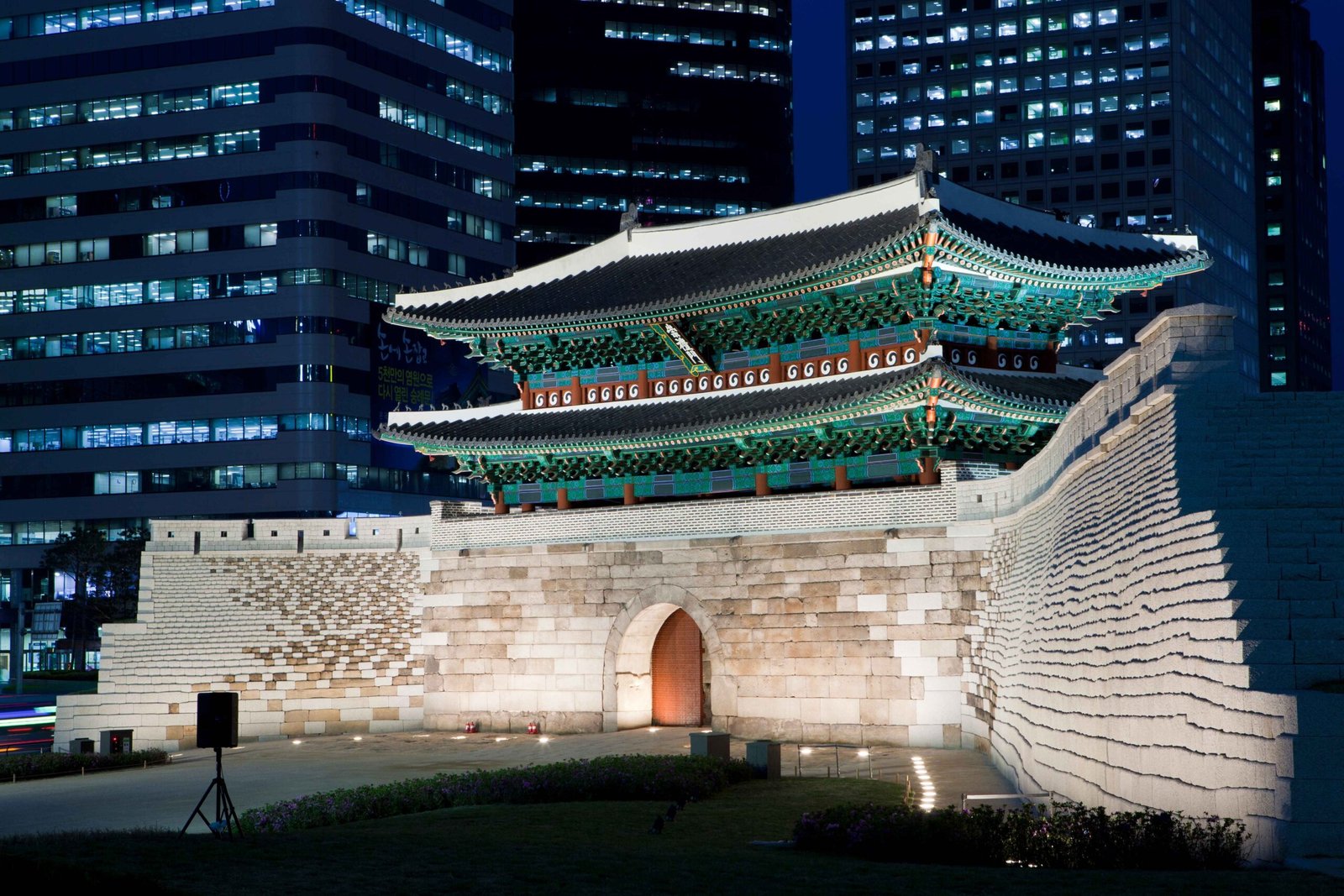
Sungnyemun Gate, the royal gate protecting the royal palace, is a representative landmark of Seoul, showcasing both the pain of modern and contemporary history and the will to restore.
Construction began in 1395 (the fourth year of King Taejo’s reign) of the Joseon Dynasty and was completed in 1398. Designated National Treasure No. 1 of the Republic of Korea in 1962, Sungnyemun Gate is a historical and cultural symbol. It is the oldest surviving wooden structure in Seoul.
Visiting Information
- Hours: 9:00 AM – 6:00 PM (Closed Mondays)
- Admission: Free
- Transportation: 5-minute walk from Seoul Station (Subway Lines 1 and 4); 7-minute walk from City Hall Station (Subway Line 1) or Euljiro 1-ga Station (Subway Lines 2 and 5).
Historical History
- Following extensive renovations in the 15th century (1447 and 1479) during the reigns of King Sejong and King Seongjong, the gate showcases the essence of early Joseon Dynasty wooden architecture.
- In 1907, the fortress walls were demolished for urban expansion and improved transportation, opening up the surrounding area. During the Japanese colonial period, it was called “Namdaemun.”
- Restoration work was carried out from 1961 to 1963 after the Korean War. After the wooden gate was completely destroyed by arson in 2008, it was restored over a five-year period from 2009 to 2013 using traditional methods, regaining its original appearance.
ⓒPhoto Korea – 이범수. 라이브스튜디오
Review
Base on 0 Reviews
Login
to review