Hightlight
-
 Accessible
-
 Architect's Choice
-
 Family-Friendly
-
 Photographer's Choice
Travel Map: Seoul
국립중앙박물관
Korea’s largest museum of art and history
Introduction
The National Museum of Korea is Korea’s largest national museum of art and history, housing over 310,000 pieces that tell the complete story of Korean history and culture.
Is It Worth Visiting?
Absolutely, even if you are not usually a museum person. This is one of the best places in Seoul to understand Korea in a single visit. Skip only if you are extremely short on time or already deeply familiar with Korean history.
Highlights
The permanent exhibitions are laid out chronologically and geographically. Many of the artifacts here are familiar treasures that Koreans recognize from their history textbooks. Here are three beloved pieces by Koreans worth seeking out:
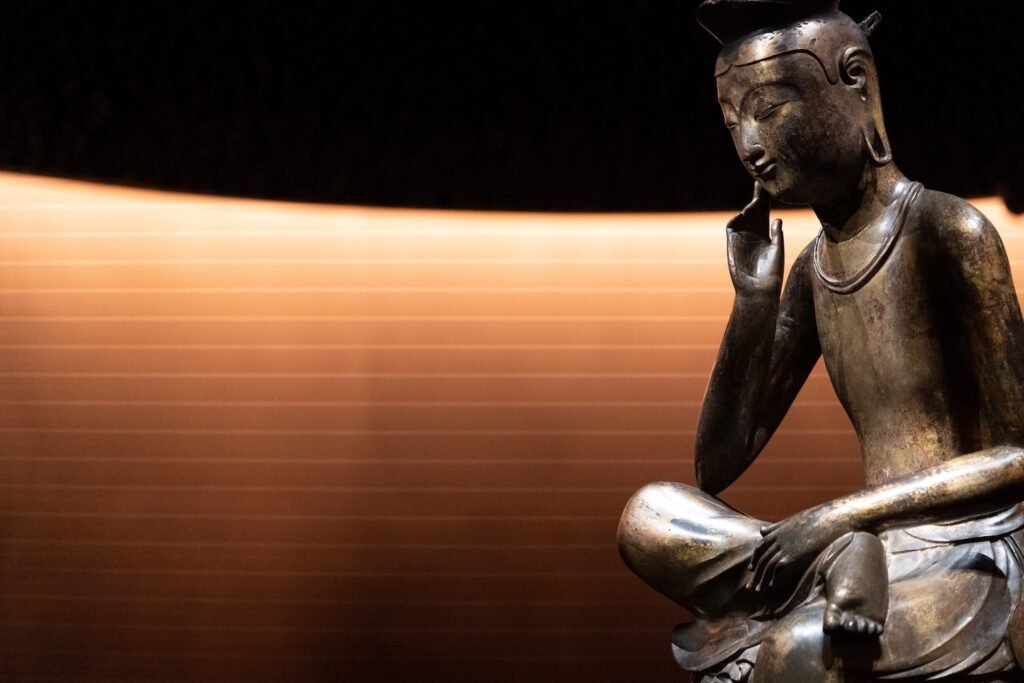
The Room of Quiet Contemplation | 사유의 방
- The Room of Quiet Contemplation on the second floor is one of the museum’s must-see spaces, comparable to the Mona Lisa at the Louvre.
- In this serene and profound room, you encounter just two pensive bodhisattva statues. Created in the 6th and 7th centuries respectively, these gilt-bronze figures showcase the finest metalworking techniques of their time.
- The pensive posture embodies spiritual contemplation, while the gentle smile suggests enlightenment. This is one of the most beloved artworks among Koreans, so I highly recommend visiting this room. Link
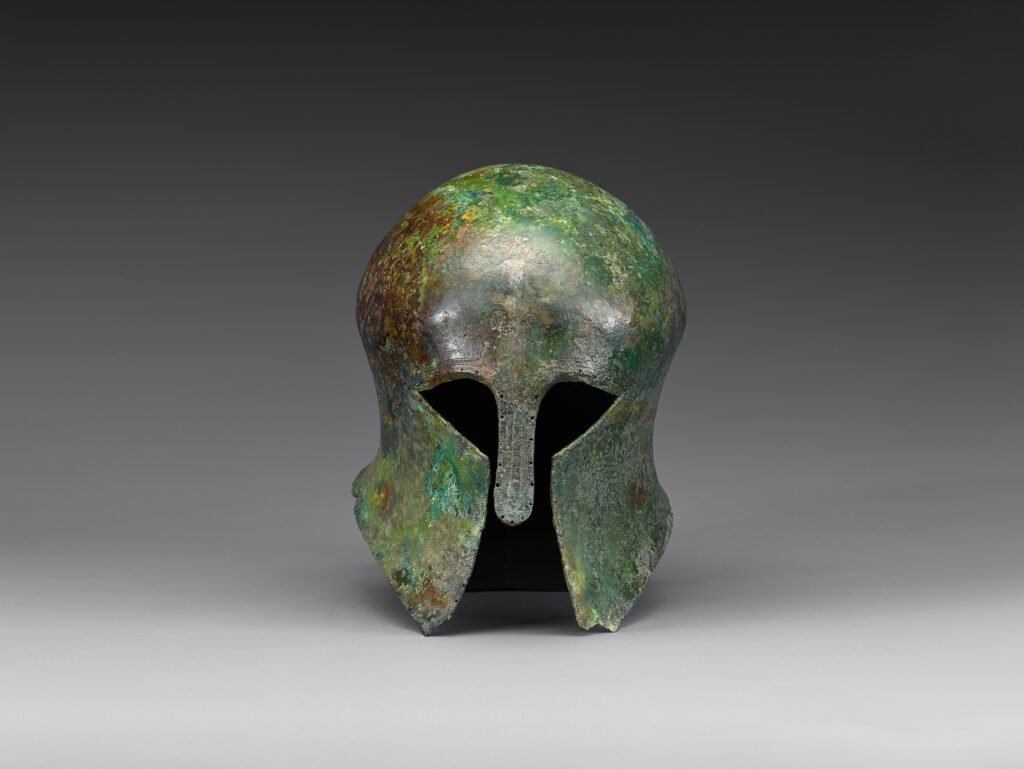
Ancient Greek Helmet
- The museum houses a remarkably well-preserved ancient Corinthian bronze helmet.
- It was awarded to Korean marathoner Sohn Kee-chung for his victory at the 1936 Berlin Olympics.
- Sohn’s Olympic victory during Korea’s loss of sovereignty made him a national hero still remembered by Koreans nearly 90 years later.
Silla Gold Crowns
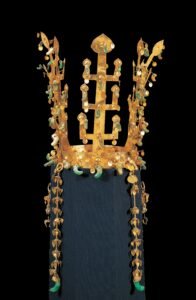
- The museum displays two Silla Dynasty gold crowns and gold belts excavated from Gyeongju. Of the six gold crowns discovered, the other four are housed at the Gyeongju National Museum.
- These crowns, representing the Silla Kingdom, showcase remarkably advanced metalworking that is hard to believe was created 1,500 years ago.
- This is the iconic form Koreans picture when they think of a royal crown.
Local Tips
You Do Not Need to See Everything
- The museum is huge. Pick several sections that interest you most and take your time.
- Trying to see it all can leave you exhausted, especially if you are not much of a museum person.
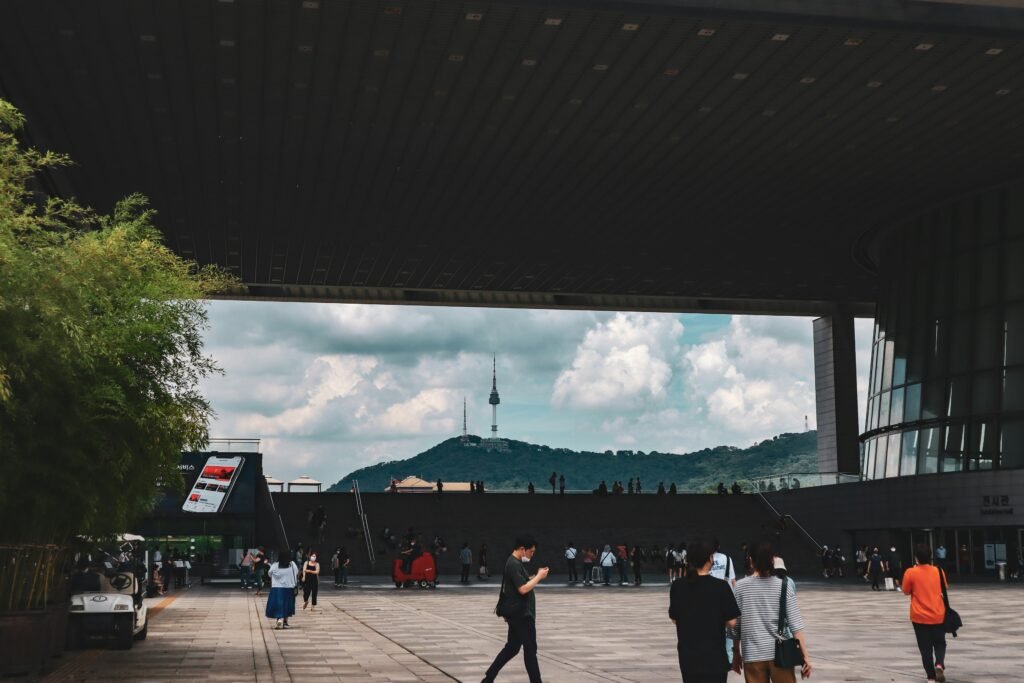
Beloved Photo Spot
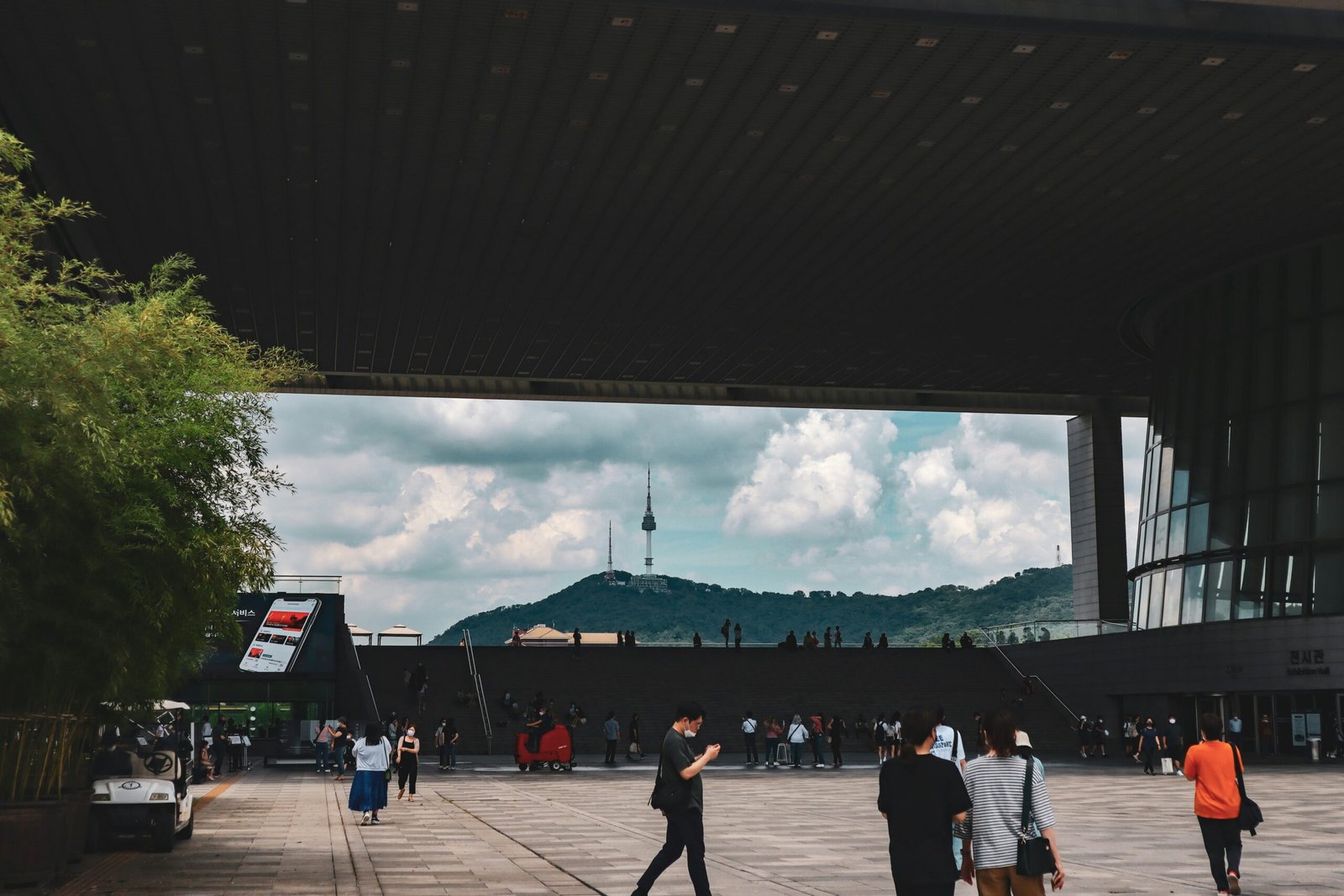
- The museum’s entrance frames N Seoul Tower in the distance like a living painting.
- It’s a beloved spot for photographers capturing silhouettes at the top of the stairs with the mountain and tower behind.
MU:DS Gift Shop
- The museum has arguably Korea’s most sophisticated and high-quality gift shop in all of Korea.
- You will find charming and creative products like miniature pensive bodhisattva statues, dancheong-patterned keyboards, and Seokguram-inspired lamps. The shop is worth visiting even if you are not planning to buy anything.
- Visits increased exceptionally after Kpop Demon Hunters.
MU:DS Website : Korean | English
Interesting Facts
Ten Story Pagoda
- As you walk through the museum, you’ll easily spot a massive ten-story stone pagoda in a lobby. This pagoda has a story with a strange twist.
- It was originally built in 1395 in Kaesong, a city now in North Korea.
- In the early 1900s, a Japanese official illegally looted it and took it to Japan. After facing public backlash, he returned it to Seoul… Yep, Seoul. Then Korea was divided into North and South.
- So, Ironically, South Koreans can see this beautiful pagoda today because a Japanese official illegally looted it.
BTS Performed Here
- In 2020, BTS held a special performance at the museum called ‘Dear Class of 2020’.
- The video attracted massive attention during the pandemic, when BTS was already a global phenomenon.
- Watch BTS | Dear Class Of 2020
Practical Info
Opening Hours
These are for the permanent exhibitions, which are free.
• Monday, Tuesday, Thursday, Friday, Sunday: 10:00 – 18:00
• Wednesday & Saturday: 10:00 – 21:00 (late opening)
• Closed: January 1 and Seollal (Lunar New Year) day
Special exhibitions have separate tickets and sometimes slightly different last entry times, but the overall building hours are the same.
Guided Tours
The museum offers free guided tours in multiple languages.
• Languages: Korean, English, Japanese, Chinese
• Duration: About 60 minutes
• Registration: On site at the information desk or via the museum website (recommended on busy days)
English tours usually run 1–2 times per day, often late morning or early afternoon. Schedules can vary by season, so checking the same day is best.