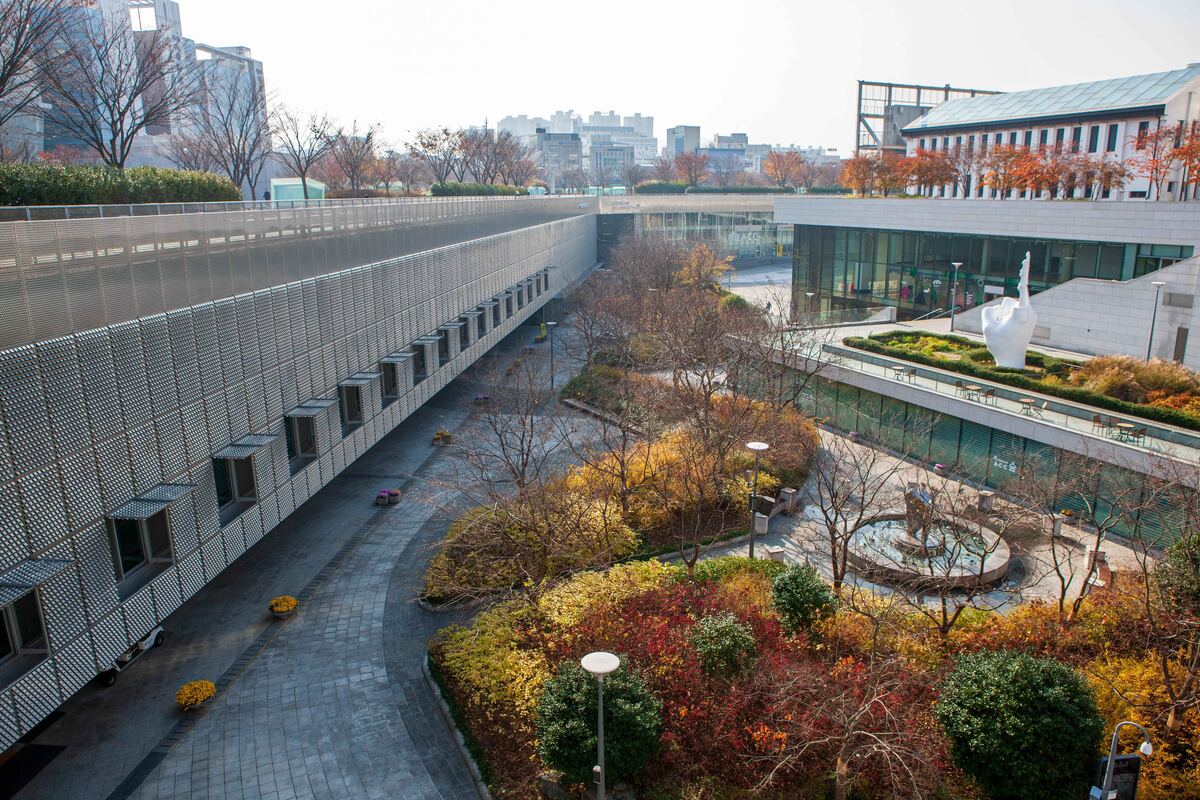
A large state-run arts and culture complex in Gwangju focused on Asian culture and the 1980 democracy movement.
The National Asian Culture Center (ACC) is a cultural complex in Gwangju built for cultural exchange, research, and the creation and presentation of art from across Asia. It opened in November 2015 after more than ten years of planning, and is run under South Korea's Ministry of Culture, Sports and Tourism. The complex is made up of five main buildings: the ACC Culture Exchange, ACC Children, ACC Archive & Research, ACC Creation, and the ACC Theater, and it is described as the largest cultural complex in South Korea.
Exhibitions and performances
The center runs about 40 exhibitions a year, including permanent displays, special exhibitions, and residency shows, along with more than 30 experimental performances covering concerts, theater, dance, classical music, and talk shows. Programs are produced with local and international artists and range from Asia-themed performances to shows for children and teenagers, as well as recurring events like brunch concerts and a "Big Door Cinema" series. The center also holds outdoor festivals through the year, including an Asia Culture Week, an Asia Literature Festival, and the ACC World Music Festival. A dedicated Children's Culture Center offers hands-on exhibits, a library, performances, and creative arts education for families. The complex also houses the Asia Culture Museum, a library with Asian arts and culture books and periodicals, and outdoor spaces including a ground-level garden called "Forest of Light."
Site tied to the Gwangju Uprising
The choice of Gwangju as the center's location was debated at the time, since the city had no prior link to major heritage sites. The design instead ties the complex to the 1980 Gwangju Uprising (the May 18 Democratization Movement): the main building takes the form of the former South Jeolla provincial office, a key site in the uprising. Construction was delayed for years after residents, victims' families, and groups connected to the movement objected to plans that would have demolished parts of the site. As a compromise, the original above-ground buildings were preserved and the newer facilities were built underground. Each May the center holds an "ACC May Culture Week" with exhibitions and events related to the movement's history. Between 2015 and 2020 the ACC recorded more than 10 million visitors and hosted 894 programs.
What to know
- In KoreanCopied
- AdmissionAdmission fees vary by facility; check the official website for details.
- Typically spend1–2 hours
Hours
- Indoor facilities operate 10:00-18:00, with Culture Information Center and Culture Creation Center extended to 20:00 on Wed/Sat. Outdoor facilities open 06:00-22:00. Check the official website for full details.
 Instagram
 Facebook
Nearby

Reviews
Book your visit
Booking through these links costs you nothing extra and helps keep our guides free.
Tickets & passes
Entry tickets and skip-the-line passes for National Asian Culture Center.
Guided tours
Walking tours and guided visits with local guides.
Experiences & classes
Local workshops, classes, and cultural experiences in Gwangju.
Day trips
Popular day trips and excursions from Gwangju.
Stay nearby
Booking through these links costs you nothing extra and helps keep our guides free.
 Agoda9.4
Gwangju Culture Hotel LAAM
 Agoda9.0
Gwangju Chungjangro Divine Hotel
 Agoda8.8
ACC Design Hotel
 Agoda8.8
Hotel Artheim
 Agoda8.7
Gwangju HOUND Hotel (formerly Gwangju Washington Hotel)
 Agoda8.7
Hotel Brown-dot chungjang
 Agoda8.5
Palace Hotel Gwangju
 Agoda8.4
L7 CHUNGJANG by LOTTE HOTELS, formerly Ramada Plaza by Wyndham Chungjang
Similar places
 Gangwon0
Yongwol Y Park
Cultural Space
Hongje Yuyeon Art Tunnel
Cultural Space
Odong Forest Library
Cultural Space
 Seoul1
National Museum of Korea
History Museum
 Busan0
Gamcheon Culture Village
Village
 Jeju Island3
Osulloc Tea Museum
Themed Museum
 Jeju Island1
Yumin Art Nouveau Museum
Art Museum
 Busan1
Arte Museum Busan
Art Museum
 guru report