

Hightlight
-
 Accessible
-
 Architect's Choice
-
 Autumn Foliage
-
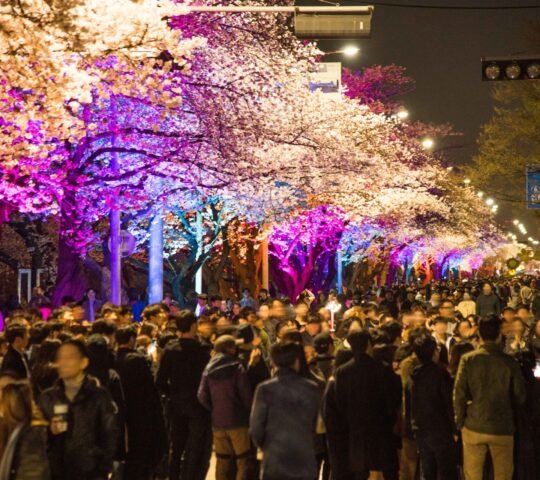
 Cherry Blossom
-
 Family-Friendly
-
 KPOP Demon Hunters
-
 Photographer's Choice
-
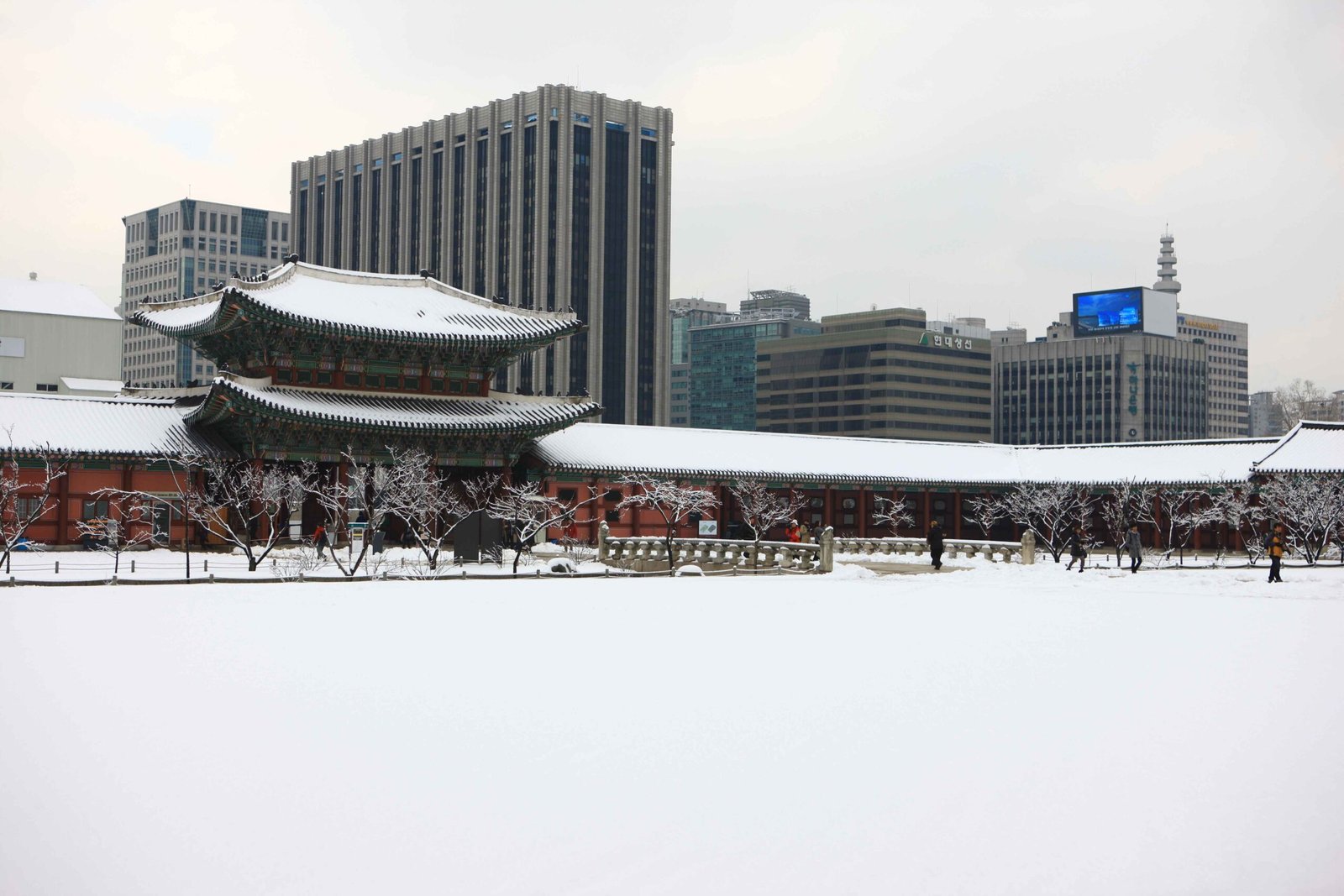
 Snow Destination
Travel Map: Seoul
Gyeongbokgung Palace | 경복궁
Korea’s largest and most iconic palace.
Introduction
Gyeongbokgung Palace is Korea’s largest and most iconic palace, built in 1395 alongside the founding of the Joseon Dynasty as its main royal residence. After being destroyed twice, it’s been meticulously restored to showcase traditional Korean palace architecture at its finest.
Worth Visiting?
Absolutely, especially for first-timers. It’s the quintessential Seoul palace experience and genuinely impressive in scale. Skip it only if you’re extremely short on time or have already seen Changdeokgung Palace.
Highlights
“Modest but Not Shabby, Elegant but Not Extravagant”
- The palace design follows the philosophy of Jeong Do-jeon (정도전), often called Joseon Dynasty’s Benjamin Franklin.
- Jeong Do-jeon described its aesthetic principle this way on his book:
“If a palace is too lavish, it burdens the people and drains the treasury. If too humble, it cannot command respect. The ideal is to be modest but not shabby, elegant but not extravagant.”
- As you explore, notice how this seemingly contradictory balance is achieved. This aesthetic runs deep in Korean sensibility, shaping everything from fashion to design to everyday life.
Work Over Pleasure
- Jeong Do-jeon designed it to keep kings focused on governing rather than pleasure. Most kings hated it for this reason, except King Sejong the Great, widely considered Joseon Dynasty’s greatest ruler, who spent most of this time here.
Symmetry and Perpendicularity
- The palace’s beauty lies in its relatively symmetrical layout. Many elements are perpendicular to each other. In architecture, this typically aims to convey a sense of majesty and solemnity.
- This is the biggest difference from Changdeokgung Palace, so keep this in mind as you explore.
Borrowed Scenery | 차경, 借景
- Cha-gyeong(차경), or Borrowed Scenery is an East Asian architectural technique that frames surrounding nature as part of the building itself.
- Unlike Western architecture’s focus on building facades, this approach integrates natural surroundings into the design. You’ll see this aesthetic throughout Korean traditional architecture – Changdeokgung Palace and Jongmyo Shrine are other great examples.
- As you walk through Gwanghwamun Gate, the view of Bugaksan mountain rising behind the palace isn’t by accident-It’s deliberate design. The palace was built to frame the surrounding mountains as part of the architecture itself.
Key Buildings
Geunjeongjeon Hall | 근정전
- The ceremonial heart of the palace where kings held court. The intricate ceiling decorations and the throne itself are stunning.
- Don’t miss the iconic painting behind the throne! It’s called Irwol Ohbongdo (일월오봉도) – a traditional screen depicting the sun, moon, and five peaks. You might recognize it from when Rumi sings Golden in Kpop Demon Hunters.
Gyeonghoeru Pavilion | 경회루
- A massive pavilion built over a lotus pond. The largest single wooden structure still standing in Korea. Absolutely gorgeous during cherry blossom season.
- Historical records mention two bronze dragons placed in the pond. One was actually discovered in 1997 and is now displayed at the National Palace Museum.
- You can enter the pavilion with advance reservations. Worth checking availability. Looking at the palace rooflines from the pavilion gives you a whole new perspective.

Hyangwonjeong Pavilion | 향원정
- A small hexagonal pavilion on an island, connected by a charming wooden bridge. Instagram gold, and surprisingly peaceful.
- Personally my favorite spot in the palace. It’s tucked away in the back, so many people pass right by it without realizing what they’re missing.
Local Tips
Panoramic View from Above
- Go up to the 4th floor of the National Museum of Korean Contemporary History (free entry, outside of the palace across the street). You can see the entire palace layout from above with Bugaksan mountain behind it. This is a favorite (and secret) spot for photographers.

Free Entry Hack
- Wear a hanbok (traditional Korean clothing) and entry is free. Tons of rental shops nearby (₩15,000-25,000 for 2-4 hours).
- Don’t worry about standing out. You’ll likely be the only one NOT wearing a hanbok unless you’re a local.
- Free admission on the last Wednesday of every month for “Culture Day”
Changing of the Guard
- 10am and 2pm at Gwanghwamun Gate (front entrance). It’s touristy but genuinely well-done and photogenic. Get there 10 minutes early for a good spot.
Interesting Facts
Royal Assassination
- Behind Hyangwonjeong Pavilion, you’ll see the queen’s quarters.
- In 1895, Queen Myeongseong was assassinated here by Japanese assassins. Her story is tragic and worth reading about. It explains a lot about Korean-Japanese relations in the late 19th century.
Why It Feels So Empty
- Only about 40% has been rebuilt. At its peak, there were over 7,700 rooms. What you see today, is just a fraction of the original complex.
- Most parts were burnt during the Japanese Invasion of 1592 or destroyed by the Empire of Japan (1910 – 1945), so most of what you see has been rebuilt or restored over the last 200 years. Restoration work is still ongoing.
That Big Empty Space at the Entry

- When you enter through Gwanghwamun Gate (or where you buy tickets), the large empty space was the site of the Japanese Government-General Building, built after Korea’s annexation (1910) as colonial headquarters.
- This building was a painful scar for Koreans. A completely different style forced into the heart of Korean architecture.
- Even after liberation, it remained standing and was used for a museum and other purposes until it was finally demolished in 1996 as a symbolic act of reclaiming Korean heritage. The museum’s collection was relocated to what is now the National Museum of Korea.
Practical Info
- Hours: 9am-6pm (extended to 6:30pm May-Aug)
- Closed: Tuesdays
- Admission: ₩3,000 (~$2.50). Combo ticket with other palaces available. Link
- How to get there: Gyeongbokgung Station (Line 3), Exit 5. You’ll see it immediately.
- Time needed: 1.5 – 2 hours minimum, 3 hours if you’re thorough or doing the hanbok thing.
Opening Hours & Admissions
| Period | Opening Hours | Last Admission |
|---|---|---|
| January through February | 09:00 – 17:00 | 16:00 |
| March through May | 09:00 – 18:00 | 17:00 |
| June through August | 09:00 – 18:30 | 17:30 |
| September through October | 09:00 – 18:00 | 17:00 |
| November through December | 09:00 – 17:00 | 16:00 |
※ Closed on Tuesdays
- However, when a public holiday or a substitute holiday falls on the regular closing day, we will be open. Instead, we will be closed the day after the holiday.
Admission Fee
| Type | Individual | Group (10 persons or more) |
|---|---|---|
| Adults (age 19~64) | 3,000 won | 2,400 won |
※ Free: aged 18 and below, seniors (aged 65 and over), those wearing a Hanbok, Culture Day (the last Wednesday of every month)
※ With the purchase of a Royal Palace Pass, admission for 4 palaces and Jongmyo Shrine is valid within three months.
※ 4 palaces: Gyeongbokgung Palace, Changdeokgung Palace, Changgyeonggung Palace and Deoksugung Palace
Free Guided Tour (English)
| Language | Day | Hours |
|---|---|---|
| English | Wed – Mon | 11:00, 13:30, 15:30 |
- Tour starts in front of Gyeongbokgung Palace Information Center inside the Heungnyemun Gate.
- Tour lasts for an hour to an hour and thirty minutes.
- Groups with 10 or more people must make a reservation in advance.
- Individuals less than 10 people can join the same tour without a reservation.
- Both the reserved groups and unreserved individuals are guided together by only one guide at a time.
Opening Hours
Monday:
9:00 - 17:00
Tuesday:
Closed
Wednesday:
9:00 - 17:00
Thursday:
9:00 - 17:00
Friday:
9:00 - 17:00
Closed
Saturday:
9:00 - 17:00
Sunday:
9:00 - 17:00
Review
Base on 0 Reviews
Login
to review