A Silla-era palace and artificial pond in Gyeongju, once used for royal banquets.
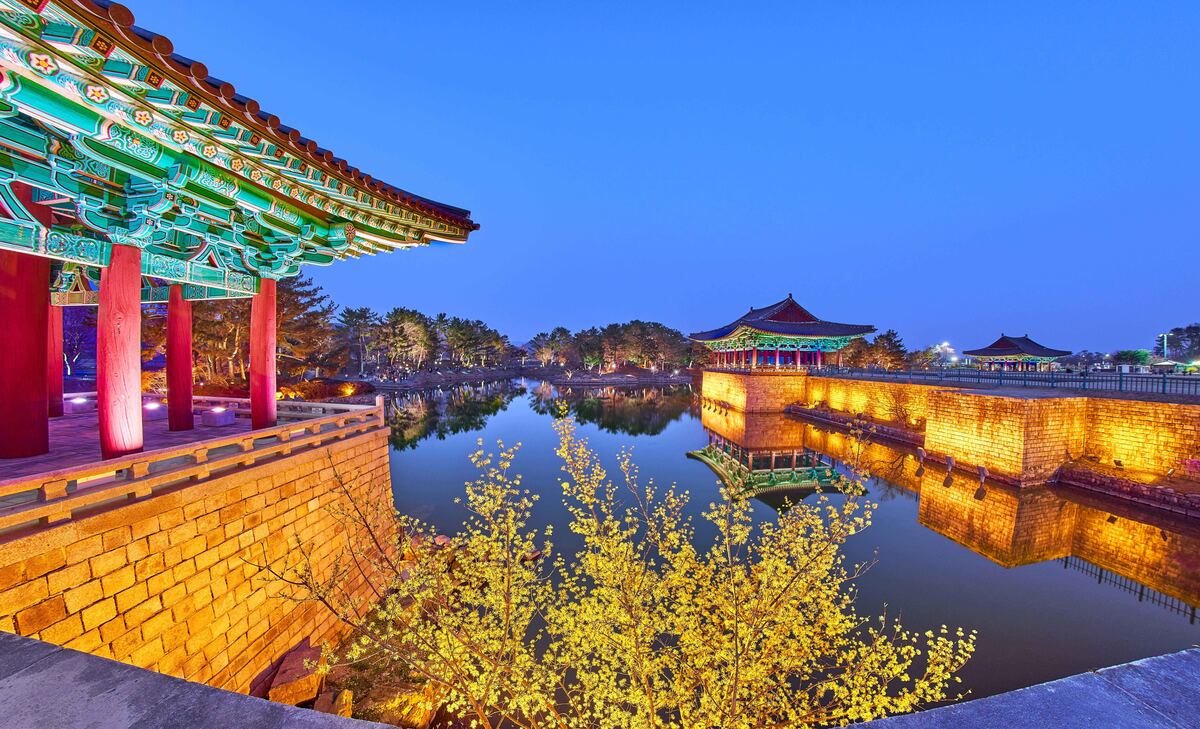
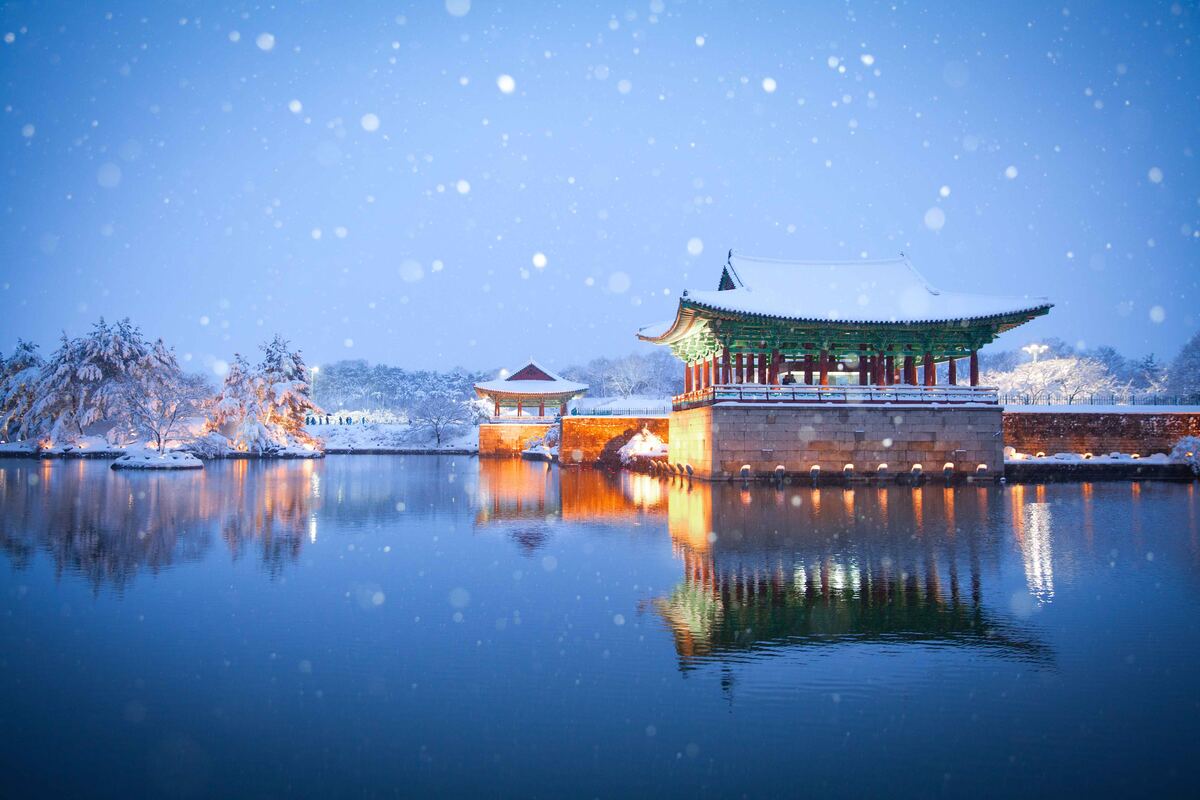
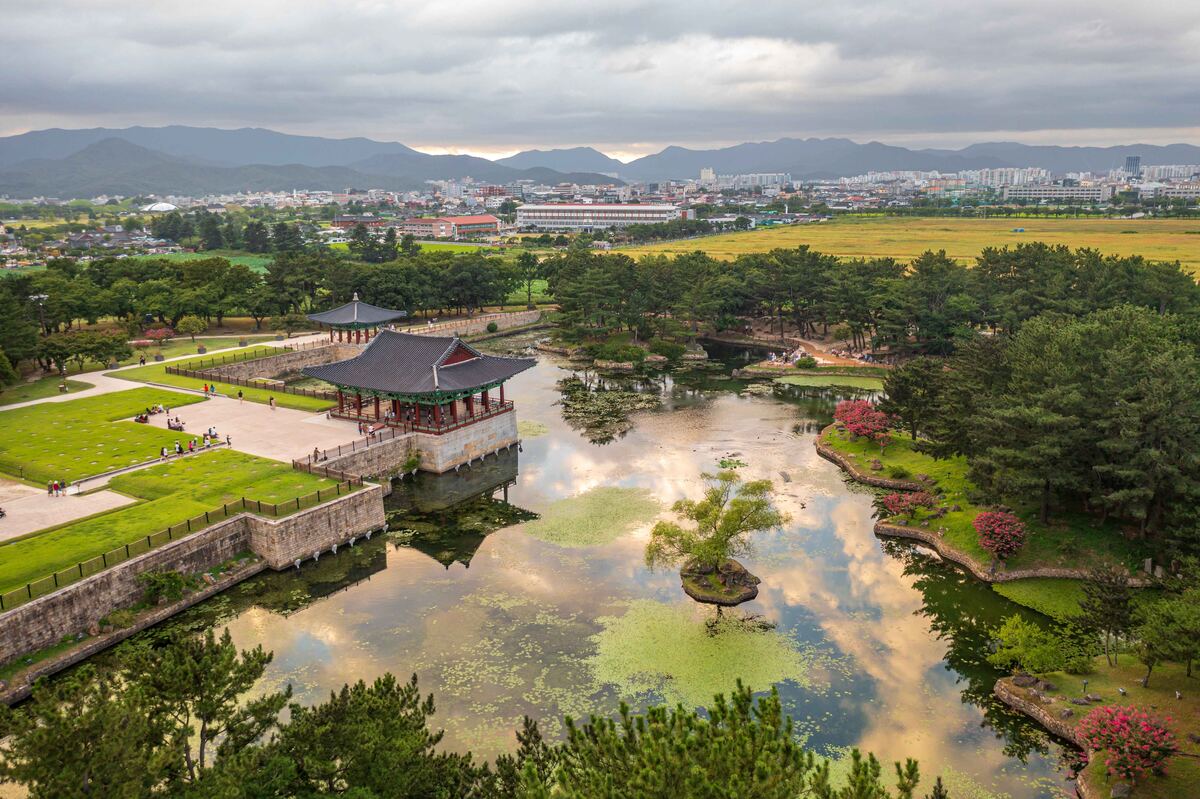
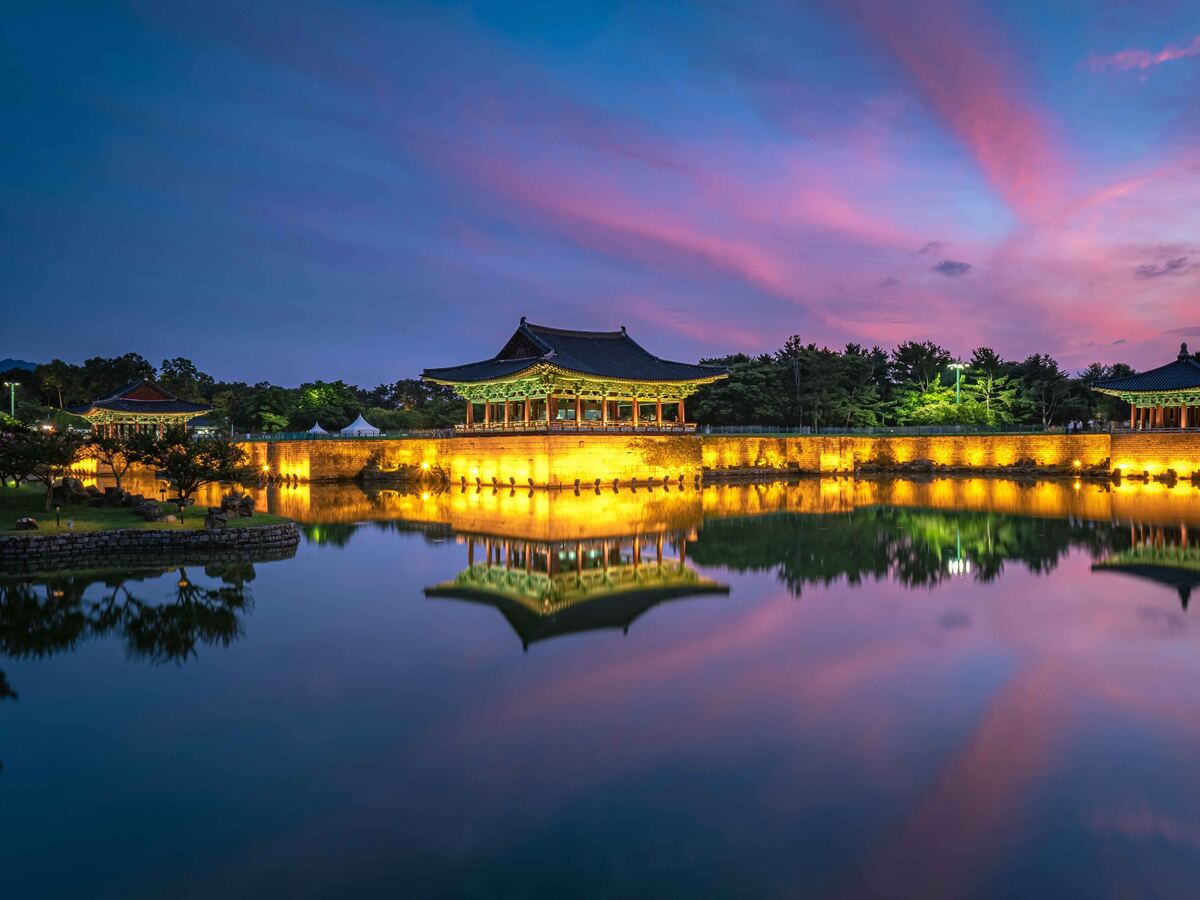
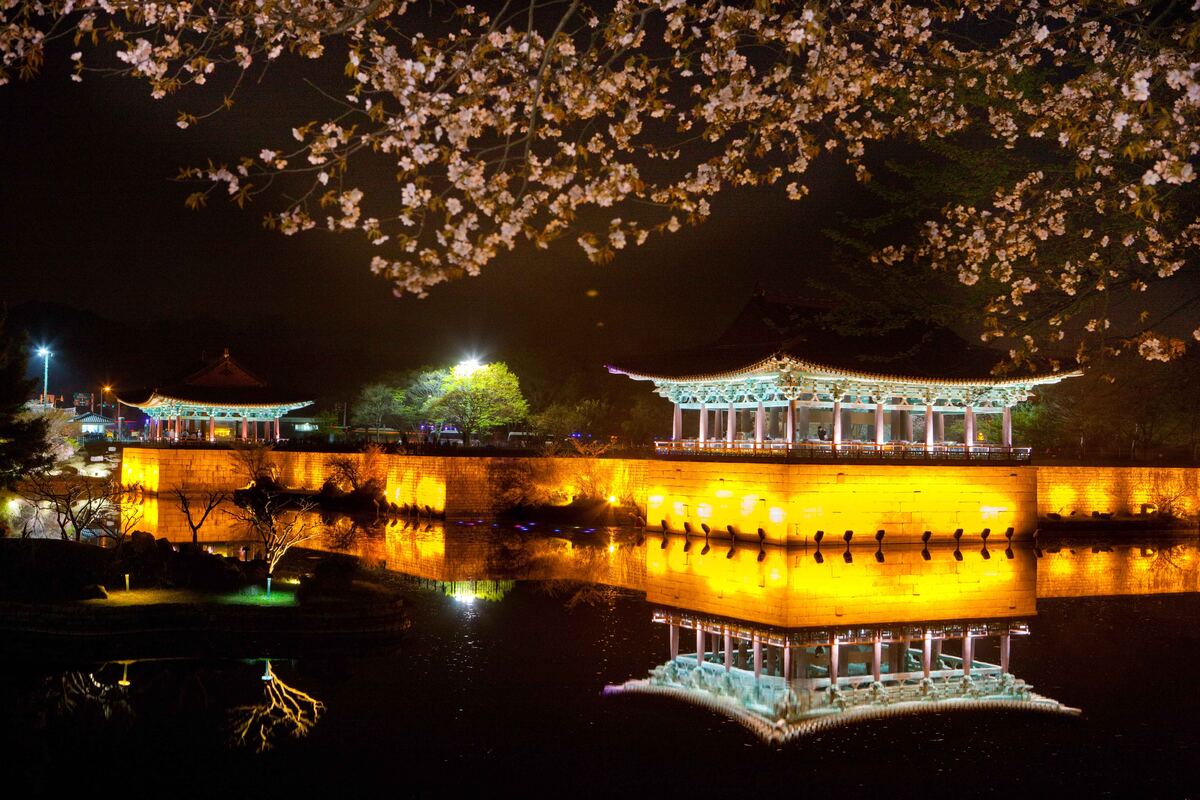
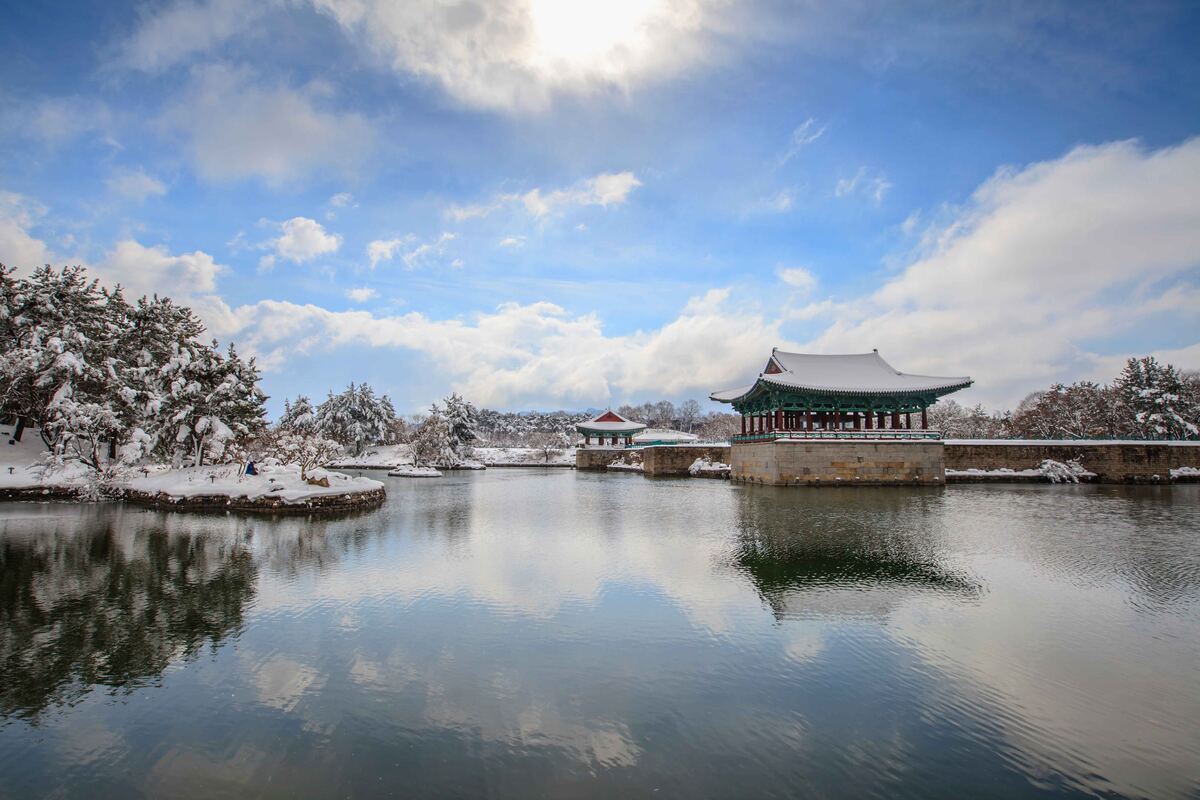
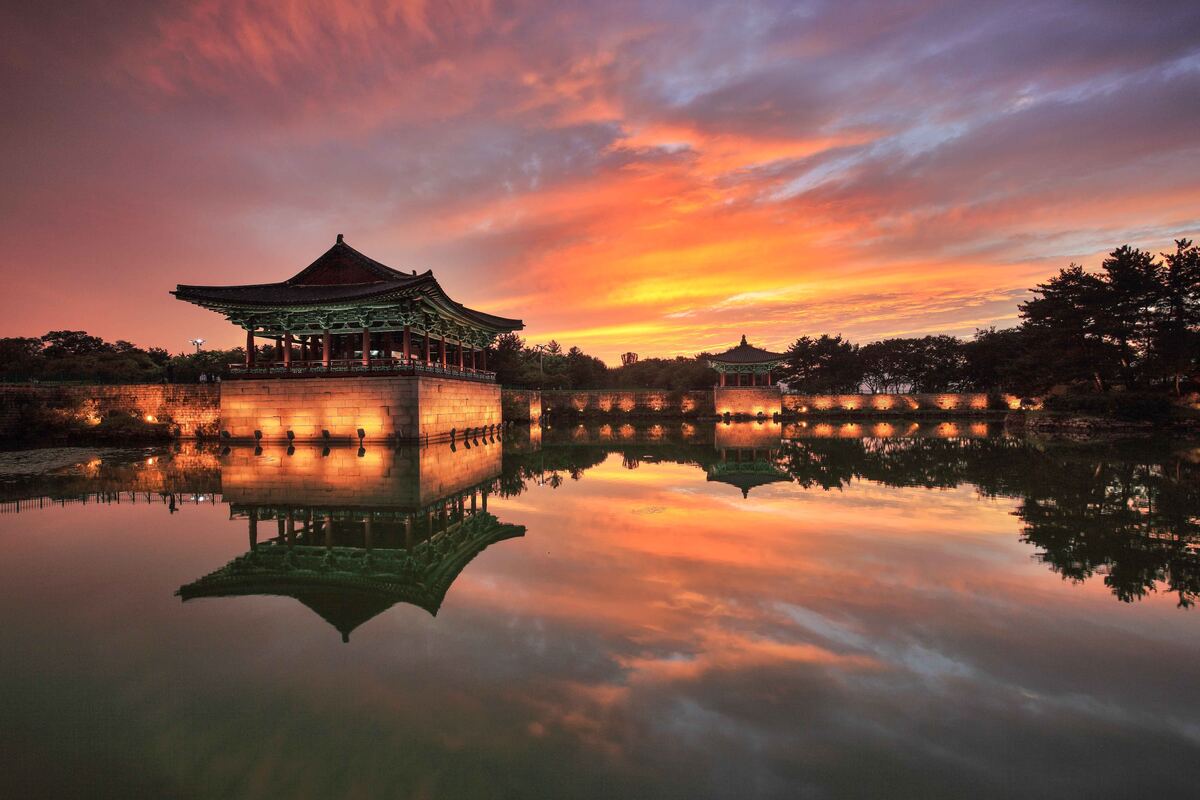
Donggung Palace and Wolji Pond are the remains of a former detached palace of the Silla kingdom (57 BCE to 935 CE), located in central Gyeongju, South Korea. Donggung served as the residence of the crown prince and was used for banquets on state occasions and when receiving important guests, while Wolji, an oval pond about 200 meters east to west and 180 meters north to south with three small islands, was built beside it. Today the site is lit at night, and the buildings reflected in the pond are considered one of Gyeongju's well-known night views.
From Anapji to Wolji
King Munmu ordered the pond built in 674 CE, in the fourteenth year of his reign, following the unification of the Three Kingdoms. According to tradition, a large pond was dug with three islands and a range of twelve peaks built to its north and east, planted with flowers and trees and stocked with rare birds and animals. After Silla fell, geese and ducks were said to gather at the abandoned pond, and it came to be called Anapji (using the characters for goose and duck). In the 1980s, excavators found pottery fragments inscribed with the word "Wolji," meaning "pond that reflects the moon," confirming that this was the pond referred to in Silla-era records. The site was renamed Donggung Palace and Wolji Pond in 2011. The 16th-century Joseon document Augmented Survey of the Geography of Korea also records the Anapji name and describes Munmu building the pond according to Taoist aesthetic principles.
Excavation and restoration
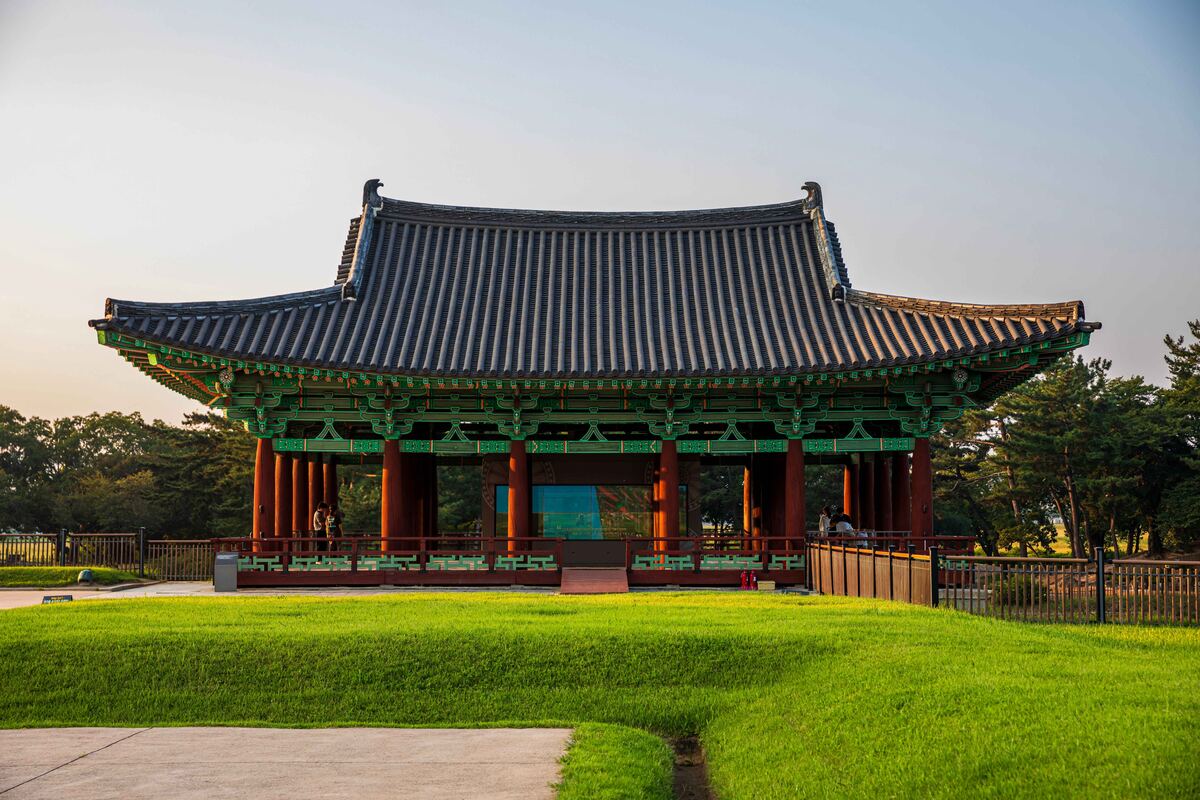
The area around Imhaejeon, the main hall, had been damaged over the centuries, including by a railway line built through it during the Japanese colonial period. Dredging and excavation beginning in 1975 (and continuing in some records to 1986) uncovered the foundations of 26 buildings, including a corridor, along with almost 33,000 relics such as roof tiles, pottery, gilt bronze Buddhist figures, jewelry and everyday items. A brick decorated with a floral pattern and inscribed with a date corresponding to 680 CE helped confirm that Imhaejeon was built in King Munmu's reign. Bowls and dishes found at the site appear to have been used in daily life rather than placed as burial goods, unlike similar objects found in Silla tombs. In 1980, three building sites believed to be Silla-era structures, including one identified as Imhaejeon, were restored along with the pond; of the 27 buildings once making up Donggung, only three have been rebuilt. The edge of Wolji was shaped with irregular curves so that the whole pond cannot be seen from any single point, an effect intended to make the pond feel larger, like open sea. A further restoration project proposed by the Gyeongju city government in 2018 was suspended after UNESCO opposed it. The site now lies within Gyeongju National Park, and about 730 of the excavated relics are on display at the Anapji Exhibition Hall, a gallery of the Gyeongju National Museum.
What to know
- In KoreanCopied
- Typically spend1–2 hours
Hours
Last admission 21:30.
- Open year-round with no closures.
Amenities
Resources
Featured in
Nearby

Reviews
Book your visit
Booking through these links costs you nothing extra and helps keep our guides free.
Tickets & passes
Entry tickets and skip-the-line passes for Donggung Palace & Wolji Pond.
Guided tours
Walking tours and guided visits with local guides.
Experiences & classes
Local workshops, classes, and cultural experiences in Gyeongju.
Day trips
Popular day trips and excursions from Gyeongju.
Stay nearby
Booking through these links costs you nothing extra and helps keep our guides free.
 Agoda9.5
Gyeongju Stone Lantern Home Hanok Stay
 Agoda9.4
Doran Doran Guesthouse
 Agoda9.4
Gyeongju Cheomseonggwan Hanok Stay
 Agoda9.3
Blueboat Hostel Gyeongju
 Agoda9.3
141 Mini Hotel
 Agoda9.0
Hwarang Guesthouse
 Agoda8.9
GAYA MINI HOTEL
 Agoda8.3
Dreamhill Motel
Similar places
 Seoul7
Gyeongbokgung Palace
Palace
 Seoul0
The Secret Garden
Palace
 Gyeongsang1
Bulguksa Temple
Temple
 Gyeongsang1
Seokguram Grotto
Temple
 Gyeongsang3
Haeinsa Temple
Temple
 Gyeongsang3
Byeongsanseowon Confucian Academy
Confucian Academy
 Gyeongsang1
Sosuseowon Confucian Academy
Confucian Academy
 Gyeongsang1
Andong Hahoe Folk Village
Hanok
 guru report