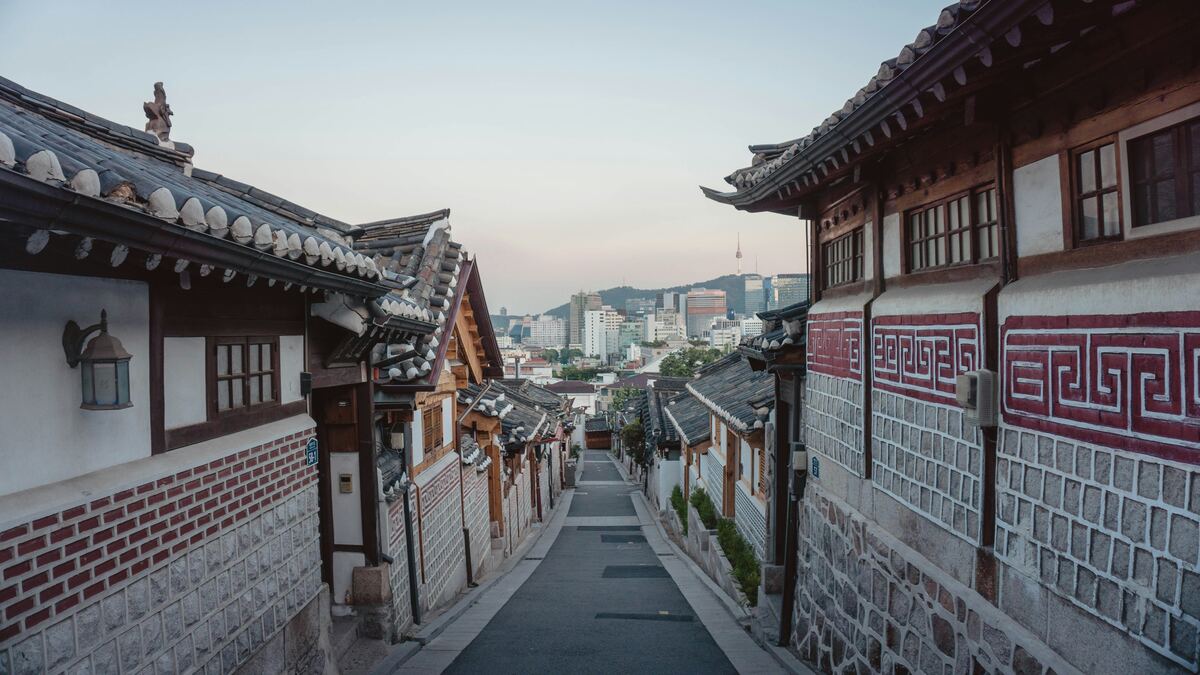
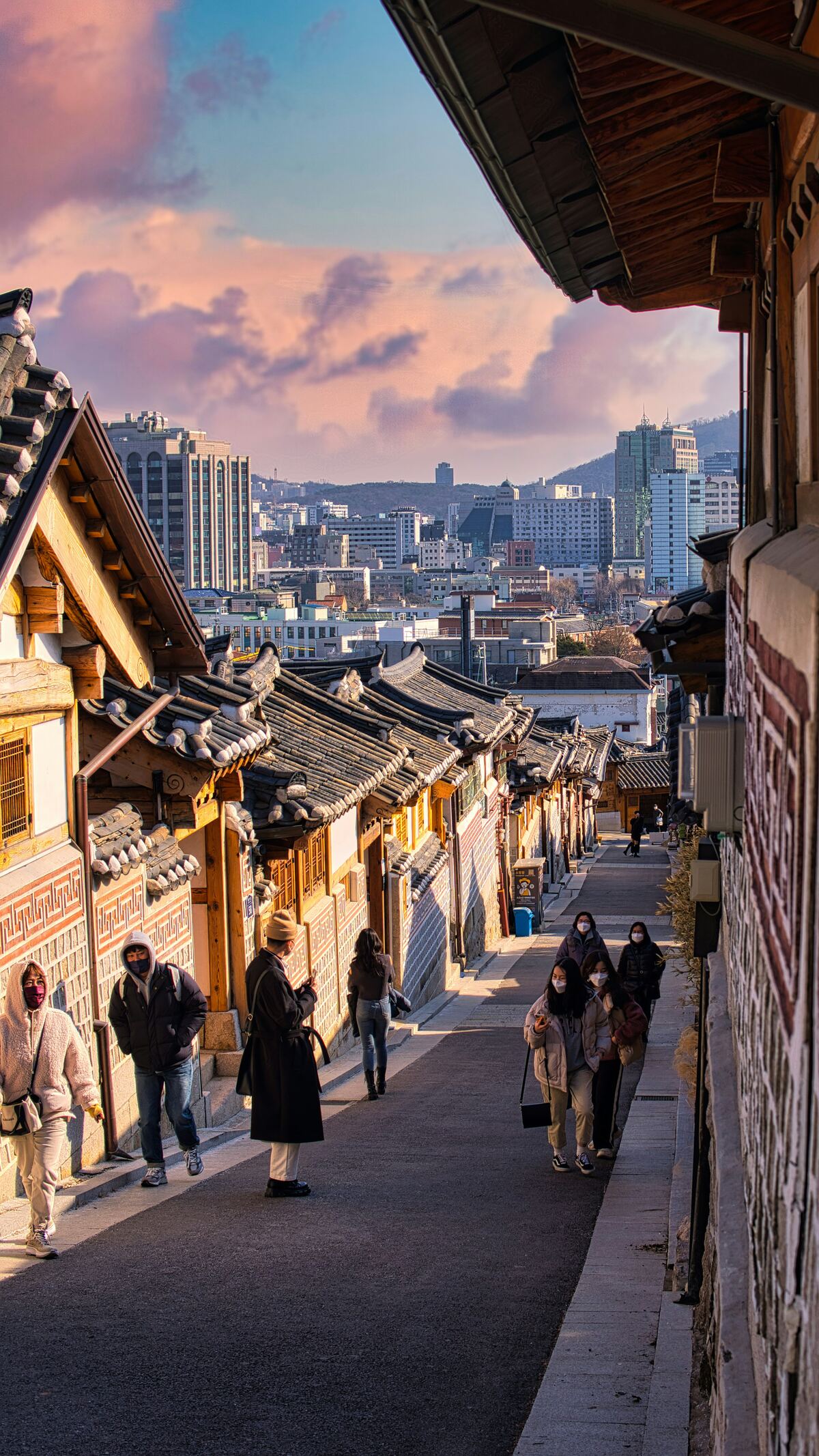
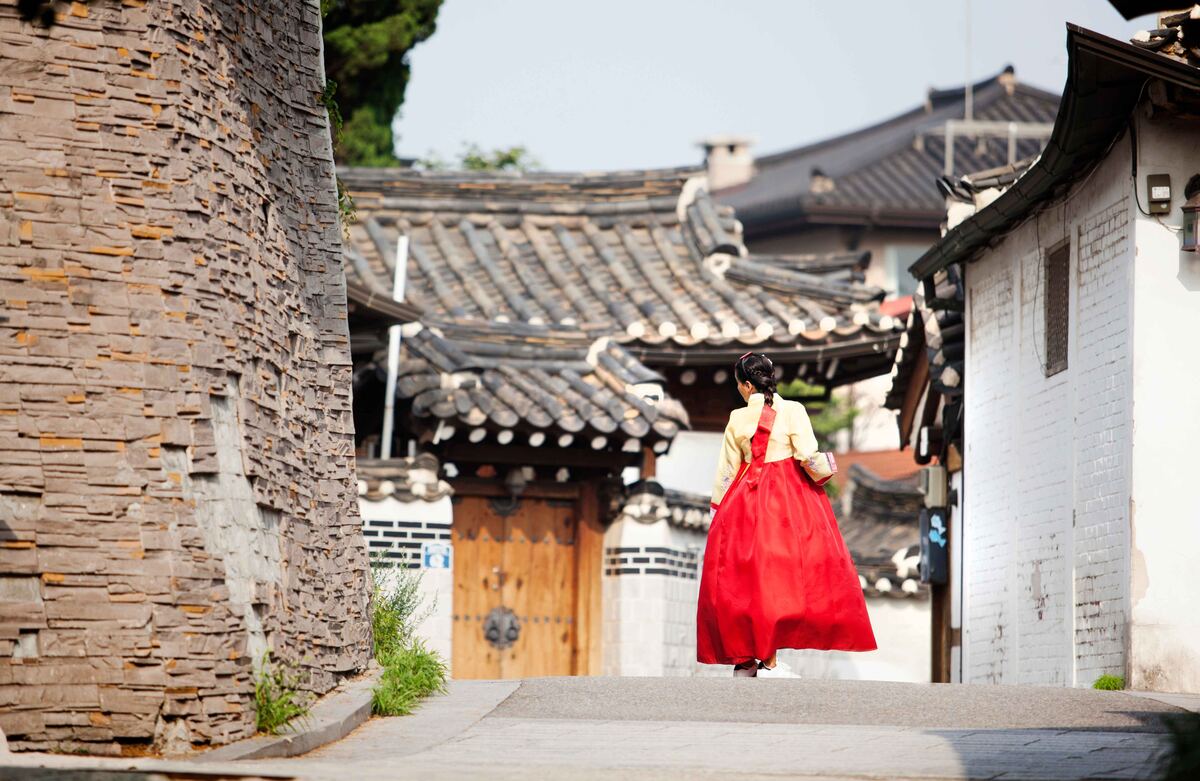
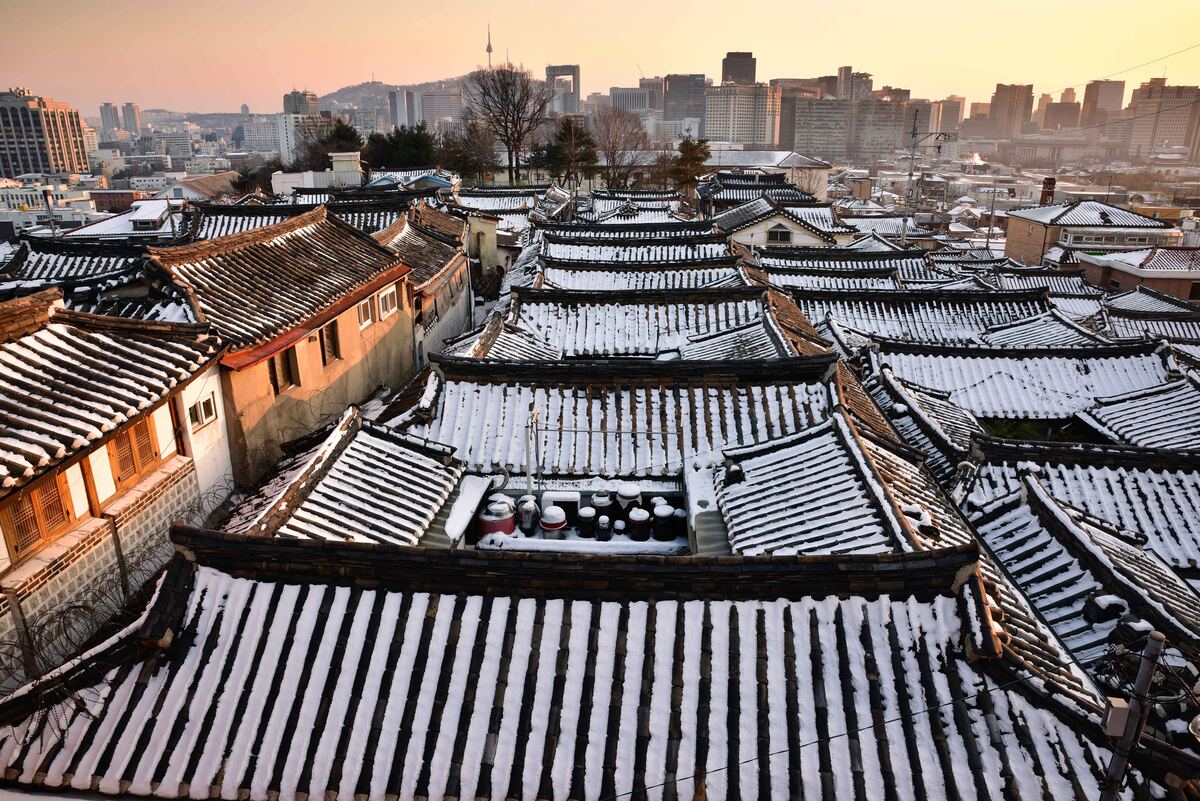
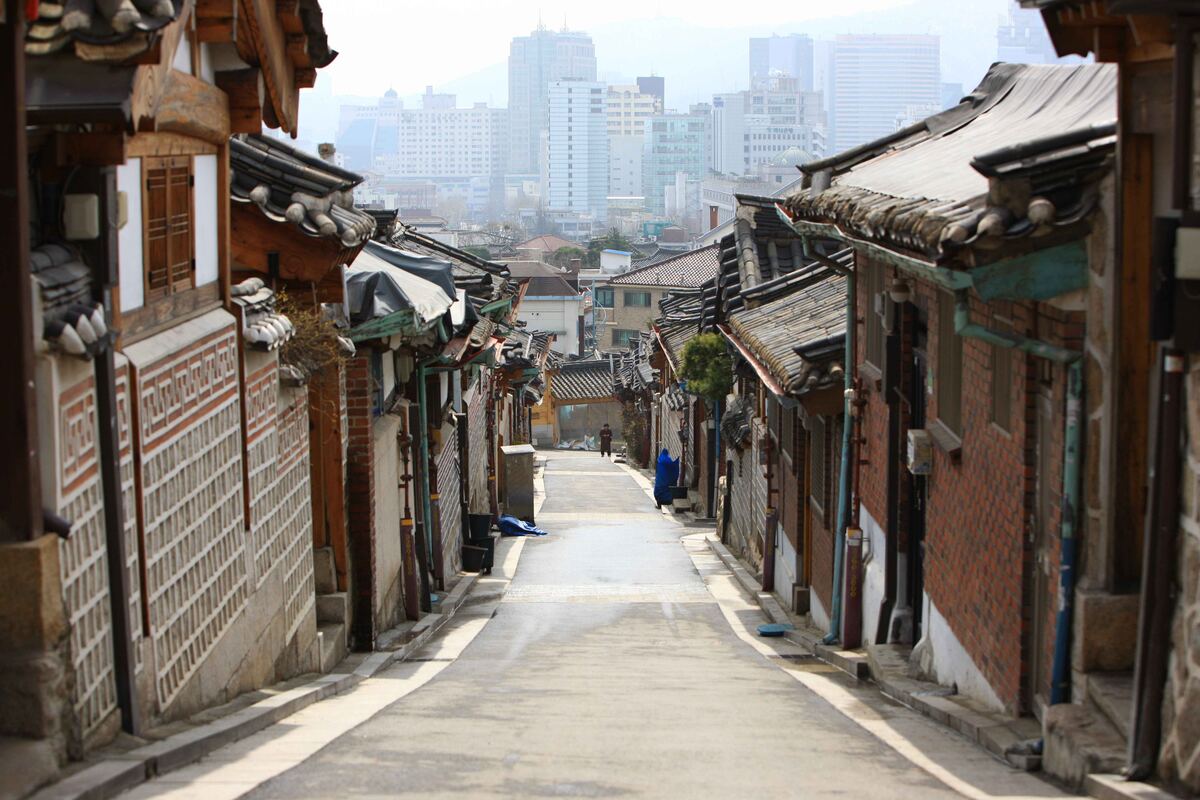
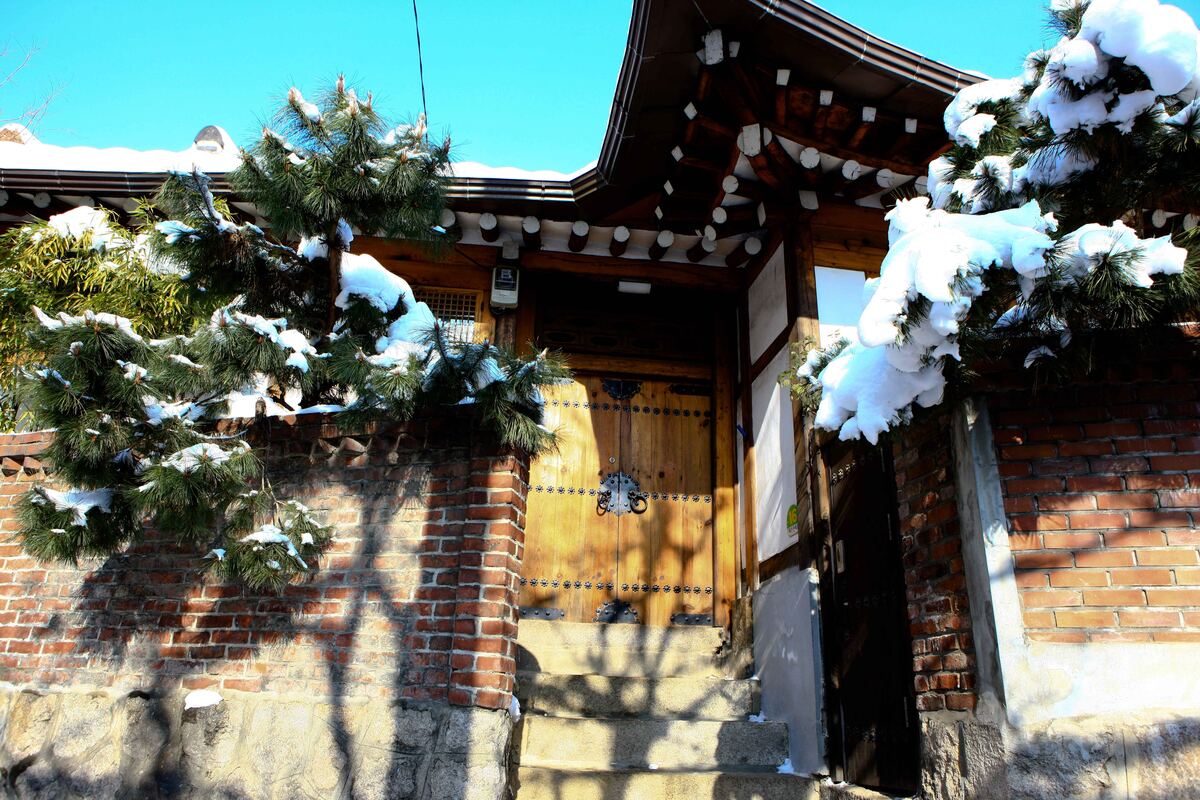
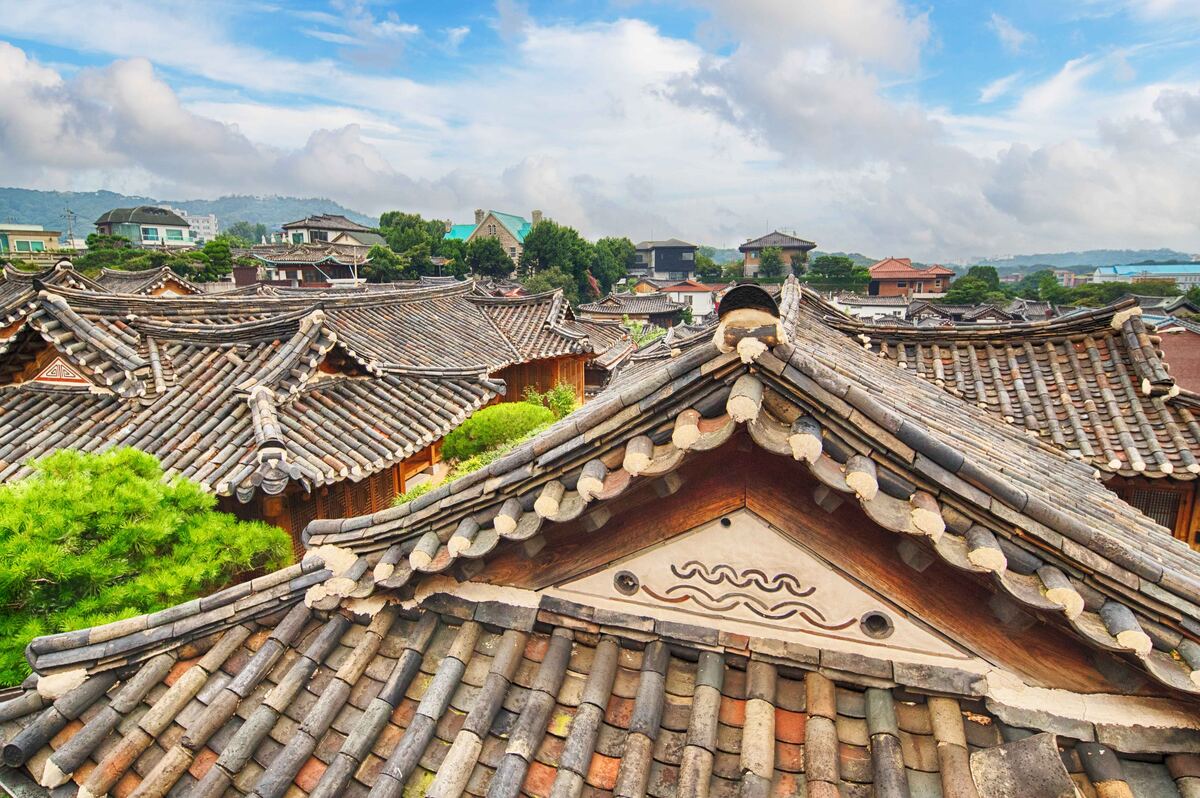
A residential district of traditional Korean houses in central Seoul.
Bukchon Hanok Village is a residential neighborhood in Jongno District, Seoul, set between Gyeongbokgung and Changdeokgung palaces and Jongmyo Shrine. It holds a dense cluster of hanok, traditional Korean houses, many of them restored, along with historic sites and cultural properties scattered through the area. The name means "north village," a reference to its position north of the Cheonggyecheon stream and Jongno. People come to walk the lanes and see the tiled rooflines of a district that has kept much of its old form.
The hanok and how they developed
Bukchon was laid out in the Joseon period as a residential quarter for high-ranking officials and nobility. A 1906 family register recorded that about 43.6 percent of its residents belonged to that class, and figures of the late Joseon and Korean Empire periods lived here in large houses. The district changed in the 1930s, when housing companies bought up the large lots and built smaller and mid-sized hanok in dense groups. These modernized houses added materials such as glass doors and electricity, which let Koreans of varied means move in. Much of the current village traces to the developer Chŏng Segwŏn, who founded an early Korean-owned real estate company around 1920 and concentrated on rebuilding Bukchon with hanok rather than Japanese-style housing.
Preservation and visiting today
Many hanok disappeared after the 1990s as multi-unit housing went up, though clusters of well-kept houses remain in some parts. The area was designated a folk landscape zone in 1976, and a 1983 hanok preservation designation limited new modern construction and building heights. Regulations were revised in 1999 and 2001 to involve residents in the process. Bukchon drew a boom of domestic and foreign visitors in the late 2000s, and in 2024 it received about 6.4 million visitors against roughly 6,100 residents. To manage the crowding, entry for visitors who are not staying in local guesthouses is limited to between 10 a.m. and 5 p.m.
What to know
- In KoreanCopied
- AdmissionFree
- Typically spend1–2 hours
- SubwayAnguk Stn (Line 3), Exit 2
Hours
- Visiting hours are 10:00-17:00.
- Access to the special-management area (Red Zone) is prohibited from 17:00 to 10:00 the next day.
- Open year-round.
Features
Amenities
Resources
Social
 Facebook
Featured in

Reviews
Book your visit
Booking through these links costs you nothing extra and helps keep our guides free.
Tickets & passes
Entry tickets and skip-the-line passes for Bukchon Hanok Village.
Guided tours
Walking tours and guided visits with local guides.
Experiences & classes
Local workshops, classes, and cultural experiences in Seoul.
Day trips
Popular day trips and excursions from Seoul.
Stay nearby
Booking through these links costs you nothing extra and helps keep our guides free.
 Agoda9.4
Seoul Story Hanok
 Agoda9.3
Hanok Hotel Daam
 Agoda8.8
Inwoo Guesthouse
 Agoda8.6
Noble tourist hotel Insadong
 Agoda8.6
Beewon Guest House
 Agoda8.5
Hanok Guesthouse 201
 Agoda8.4
The Place Seoul Hanok Guesthouse
 Agoda8.4
 guru report